The European Ocean Pact: A new ambition for ocean governance
11.03.2026





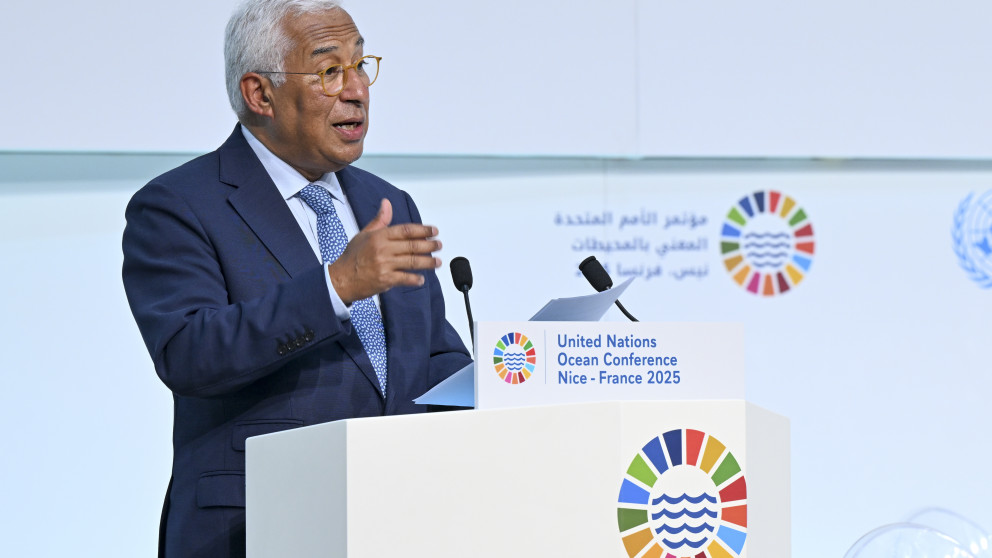
Turning the tide of EU ocean governance
Presented by the European Commission in June 2025, the European Ocean Pact is the EU’s “comprehensive strategy to better protect the ocean, promote a thriving blue economy and support the well-being of people living in coastal areas”. The Ocean Pact comes at a moment when Europe’s seas are under increasing pressure from excessive resource exploitation, biodiversity loss, pollution (monitored hazardous substances in marine organisms exceed safe limit values), and climate change (leading to ocean acidification, ocean warming and deoxygenation as well as sea-level rise and increased coastal erosion and flooding). These pressures coincide with competing demands for marine space from human activities such as transport, offshore wind energy, fisheries, resource extraction, and tourism. At the same time, the EU and its Member States aim to place 30% of their total marine area under protection by 2030, with at least 10% of the total marine area strictly protected.
With the Ocean Pact, the EU aims to provide a coherent policy framework across ocean-related matters by building on existing legislation and initiatives. The Ocean Pact lays out the foundations for an Ocean Union – where Member States and stakeholders coordinate across existing ocean-related policies and initiatives to coherently protect and manage European seas and coasts. The Ocean Pact sets out six priorities: 1) protecting and restoring ocean health; 2) boosting the sustainable competitiveness of the blue economy; 3) supporting coastal communities; 4) advancing ocean research and innovation; 5) enhancing maritime security and defence; and 6) strengthening the EU’s role in global ocean diplomacy.
At the centre of the Ocean Pact is the announcement of an Ocean Act by 2027, to be built on a revision of the EU’s Maritime Spatial Planning Directive and intended to consolidate ocean-related legislation and deliver a coherent implementation of EU policy objectives. Alongside this, the Commission will establish a dashboard to monitor and report progress on relevant indicators and targets as well as a high-level Ocean Board to bring together representatives from across ocean-related sectors and support the Commission’s implementation of the Ocean Pact. The Ocean Pact frames the future Ocean Act around key principles and guiding actions, including a source-to-sea approach on tackling pollution; a precautionary principle; a science-based approach to policy decisions; and an ecosystem-based approach to managing the EU’s seas.
The Ocean Pact also sets a regional focus, emphasising coordinated sea basin planning that balances ecological boundaries with economic use, fostering co-existence among sectors. Building on existing regional frameworks such as the Regional Fisheries Management Organisations and Regional Sea Conventions, which is described in the Ocean Pact as central to implementing the Common Fisheries Policy and the Marine Strategy Framework Directive, and sea basin initiatives, the forthcoming Ocean Act is intended to encourage Member States to move from national approaches to a sea basin approach, cooperating with neighbouring countries.
Below the surface
The Ocean Pact signals a new level of ambition in EU ocean governance. However, while the Pact recognises implementation gaps and calls for stronger enforcement, it primarily focuses on streamlining and coordinating existing legislation and processes (rather than creating new binding obligations). A first set of priorities proposed in the Ocean Pact includes:
- Integrating ocean-related targets on climate, pollution, and biodiversity to strengthen maritime spatial planning and address the triple planetary crisis of pollution, climate change and biodiversity loss;
- Addressing climate-related issues and impacts of climate change, including by introducing climate-smart maritime spatial planning;
- Aligning the Maritime Spatial Planning Directive and Marine Strategy Framework Directive;
- Drawing up integrated sea basin management plans that include existing ocean-related binding targets of the EU; and
- Providing stronger, more coordinated governance of ocean observation with a competitiveness dimension.
It remains to be seen how this first set of policy initiatives and the vision set out in the Ocean Pact will be translated into the Ocean Act and its components. But it is clear that the EU and its Member States must go beyond previous ambitions of marine policy integration, such as the first steps taken in the EU’s Integrated Maritime Policy (2007) or the Marine Spatial Planning Directive (2014). Both instruments sought to increase coordination across marine policy domains, but lacked compulsory measures for integration and failed to fully address the multitude of pressures facing Europe’s seas and coasts. Going further than previous initiatives, the EU must translate its ambitions into concrete measures for coordinated action, while strengthening efforts to monitor and enforce existing legislation.
Delivering on the vision of the Ocean Pact
Delivering the Ocean Pact will depend not only on ambitious targets and subsequent action, but also on how Europe’s governance system functions in practice – meaning who is responsible for what, how actions are coordinated across sectors and levels and how progress is monitored – allowing for rethinking and adapting governance strategies.
EU ocean governance is multi-layered, stretching across the EU, Member States, regional seas (sea basins), and sub-national (e.g., local) authorities as well as cross-sectoral, involving a diverse array of sector activities (e.g. fishing, offshore wind, shipping, and tourism). For the Ocean Pact’s vision to be achieved, collaboration between governance layers and across sectors is essential. Insights from the PermaGov project show that the Ocean Act would need to ensure institutional coordination between governance levels and strengthen existing formal multi-level structures, while also enabling authorities to test and innovate new governance strategies for land-sea interaction or maritime spatial planning, for example, integrating ocean targets (i.e. on climate, biodiversity, pollution) while maintaining EU oversight. To underpin coordination efforts, the Ocean Act must also foster collaborative governance, such as by establishing minimum standards for participatory processes, ensuring transparency, inclusive representation, and sustaining engagement. Going further, it will be important to monitor, adapt, and improve the capacity of the governance system to respond to the demands of the Ocean Pact through regular assessments which identify, for example, enforcement barriers and coordination failures in an effort to boost governance capacity. Digital e-governance tools (e.g., dashboards to support decision making) should be supported to broaden engagement, enhance transparency, and strengthen legitimacy of policy decisions.
Policy coherence will also be critical to achieving the ambitions of the EU Ocean Pact. If policies work together and reinforce each other, while also avoiding contradictions, they can accelerate progress towards overarching societal goals. If coherence is lacking, however, policies risk pulling in different directions and undermining their objectives. Analyses from the CrossGov project show how this plays out in practice. For example, the Renewable Energy Directive (RED III) and the Marine Strategy Framework Directive (MSFD) are both binding, but they operate differently: RED III drives deployment through targets and permitting provisions, while the MSFD relies on assessment cycles and programmes of measures to achieve Good Environmental Status. However, they fail to coordinate across policy cycles and address trade-offs in planning decisions. Efforts to overcome these deficiencies and reinforce coherence across the different policies and their instruments could be strengthened by requiring (sea basin) coherence plans linked to maritime spatial planning. These could drive inter-authority coordination and be anchored in standardised assessments, shared procedures for conflict resolution (to address trade-offs), relevant indicators and reporting mechanisms.
The ecosystem-based approach to management, one of the four core principles of the future Ocean Act, is about balancing human needs with sustainability safeguards that protect, restore, and manage marine ecosystem services. While the ecosystem-based approach has been around for decades, its potential remains to be fully unlocked. The Ocean Act offers a window of opportunity to implement this approach and address complex social-ecological challenges. As demonstrated through the Marine SABRES project, there is a need for simple tools that enable decision makers to peer into complex social-ecological systems when managing marine spaces. However, decision support tools must be underpinned by governance approaches that overcome existing gridlock by establishing new mechanisms to support participatory processes in management and boosting capacity for joint action to address trade-offs in decision making.
The source-to-sea approach, another of the key principles forming the basis of the future Ocean Act, focuses on the inherent interlinkages and dependencies among ecosystems – from source-to-sea – and promotes coordinated actions that consider upstream and downstream linkages, ensuring that interventions in one part of the system do not inadvertently cause harm elsewhere. The SOS-ZEROPOL project demonstrates the application of a source-to-sea approach to better identify connections between land-based pollution drivers and their impacts on the ocean – helping to reveal critical opportunities for management. For example, when considering tyre wear particles, an emerging source of plastic pollution in the sea, the source-to-sea approach helps to identify opportunities to alleviate pollution before impacting marine ecosystems, such as through tyre design, road construction, or water systems. An opportunity in the Ocean Act could be to require terrestrial planning efforts, river basin management, and maritime spatial planning to formally align. Alignment would help to create an ‘integrated lens’ for management and could include tools such as monitoring and reporting frameworks built on shared indicators, collaborative platforms, and plans for addressing source-to-sea concerns.
The Ocean Pact acknowledges the ocean-climate nexus by addressing the diverse effects and impacts of climate change on the ocean and seas and by highlighting the need to enhance resilience of coastal communities. It further emphasises the critical role of the ocean for climate regulation and establishes the ocean “as an ally in the fight against climate change” via its function as global carbon sink. The Ocean Pact foresees restoration of at least 20% of degraded habitats by 2030, a measure intended to preserve and enhance marine and coastal ecosystems’ ability to sequester and store “blue carbon”. The Ocean Pact’s aim to strengthen the ocean governance framework to align across policies is also relevant for the ocean-climate-nexus, and can thereby strengthen governance of blue carbon as well as of emerging and potentially harmful activities that aim to enhance the ocean’s potential for carbon sequestration and storage, namely marine carbon dioxide removal (mCDR). The OceanNETs project has highlighted the need for comprehensive governance strategies for such activities as part of a future portfolio of actions for combatting climate change. This is crucial to anticipating and mitigating both intended and unintended consequences of such activities.
Looking ahead
The Ocean Pact represents an important vision to coordinate EU ocean governance and lays the groundwork for a comprehensive strategy to address the pressing issues facing Europe’s seas and coasts while managing human activities sustainably. It is essential that the forthcoming Ocean Act translates these ambitions into formal measures which can be both monitored and enforced. Critical to the success of the Ocean Act will be formalised collaboration between governance levels and sectors to address the diverse demands placed on the ocean as well as innovative approaches to monitor and address policy coherence. It is also necessary that the Ocean Act operationalises core principles such as the ecosystem-based and source-to-sea approaches through innovative tools and management approaches to support decision makers. The Ocean Pact is a call to action to face the triple planetary crisis and safeguard the EU’s coasts and seas through governance reform along with innovation, investment and diplomacy. Unlocking its potential will deliver an Ocean Union with a resilient, sustainable, and productive ocean space.