Decolonisation, Gender Studies, and the Nordics
21.01.2026


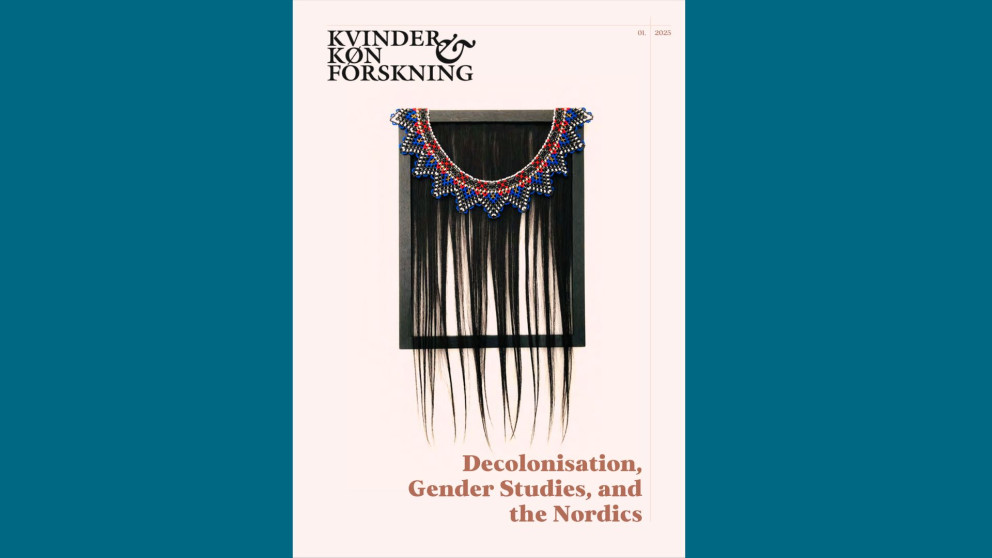
RIFS researchers have contributed to the new special issue “Decolonisation, Gender Studies, and the Nordics” in the Women, Gender & Research Journal. Naja Dyrendom Graugaard, a RIFS Affiliate Scholar, served as the chief co-editor of the issue. RIFS Research Associate Anne S. Chahine and Research Group Leader Nina Döring collaborated with Nina Hermansen and Jan-Erik Henriksen from the Indigenous Voices (IVO) research group at the Arctic University of Norway (UiT) on an article titled: “Towards decolonial Arctic research relations: Co-creating spaces for shared embodied experiences in a European research community”.
The issue engages the theme of decolonisation, bringing decolonial and Indigenous scholarship in conversation with gender studies. As Graugaard et al. (2025) write in the introduction, the issue "comes at a moment in time that calls for critical and rigorous analysis of how structures of coloniality and hetero-patriarchy continue to shape the present, during a time when colonisation takes on renewed and continuing forms and appearances". Situating the special issue in the current political moment, the special issue editors reflect on coloniality and colonialism in the Nordic region and beyond as an enduring structure that continues to organize whose bodies, lives, territories, and knowledges are rendered legitimate.
The article by Anne S. Chahine, Nina Hermansen, Nina N. Döring, and Jan-Erik Henriksen is based on the co-authors’ long-term collaboration, having worked together in various projects and engagements, such as “DÁVGI: Co-creation for Biocultural Diversity in the Arctic” and currently “BIRGEJUPMI: Bridging Knowledge Systems for Inclusive, Resilient, and Prosperous Arctic Coastal Futures”. In their article, Chahine et al. (2025) focus on the dynamics and the specifics of a European research community working on Arctic issues, by theorising affective spaces of collaboration between Indigenous and non-Indigenous scholars, emphasising co-creation as a practice of epistemic justice. A key learning they share is that “caring for and deepening research relations across knowledge systems requires a long horizon, constantly reaffirming and negotiating our relationships over time” (p.201).
The special issue embraces complexity, bringing together no less than 25 contributions that shed light on this topic from various perspectives, including 15 peer-reviewed articles, 7 essays, debates, and artistic pieces, and 3 book reviews. The authors – scholars and artists – occupy diverse positions, experiences, and knowledges on topics related to decolonisation and gender studies in the so-called Nordic region and beyond. Importantly, the special issue also foregrounds contributions rooted in lived, Indigenous, and other minoritized experiences of colonisation, recognizing these as essential forms of expertise that challenge dominant academic hierarchies. It also highlights artistic, collaborative, and practice-based forms of knowledge as central to decolonial feminist thinking. By bringing diverse epistemic traditions into conversation, the special issue and the contributions together ask how coloniality shapes gender and sexuality today—and what alternative modes of relation and knowledge-making can unsettle it.
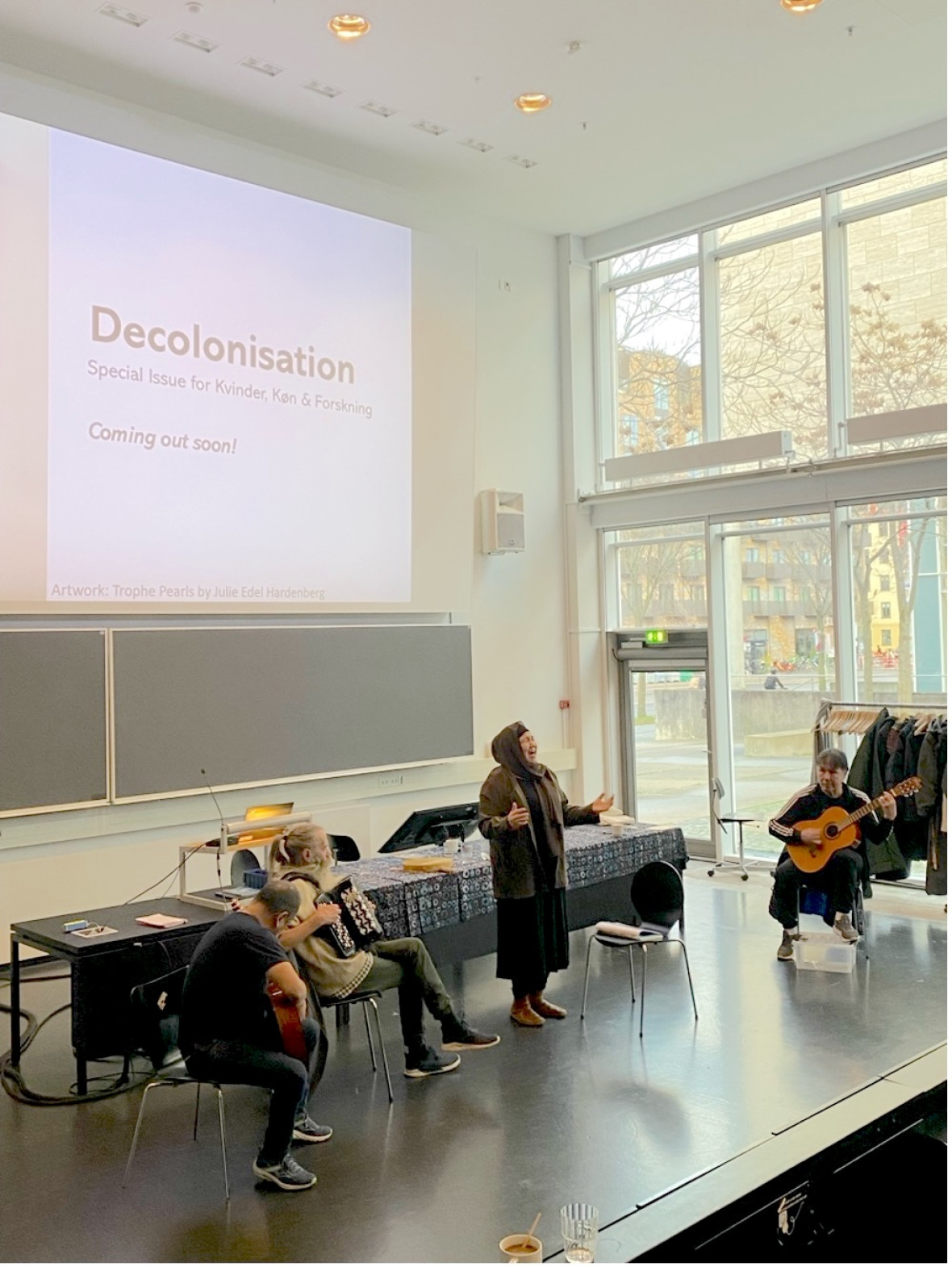
On 18. November, the special issue was pre-launched at Copenhagen University as part of the university’s gender research day. The programme incorporated inputs by contributors to the special issue: an introduction by Naja Dyrendom Graugaard; a poetry reading by Henriette Berthelsen; a panel conversation with Nina Cramer, Katrine Dirckinck-Holmfeld and Henriette Berthelsen, moderated by Naja Dyrendom Graugaard; and music and songs by the band Qivittoq, with lead singer Klaudia Petersen.
The special issue is available to interested readers as a barrier-free, open access publication on the journal’s homepage.