Domestic Mining for Resource Justice? Debunking Myths in the EU Raw Materials Debate
11.06.2026

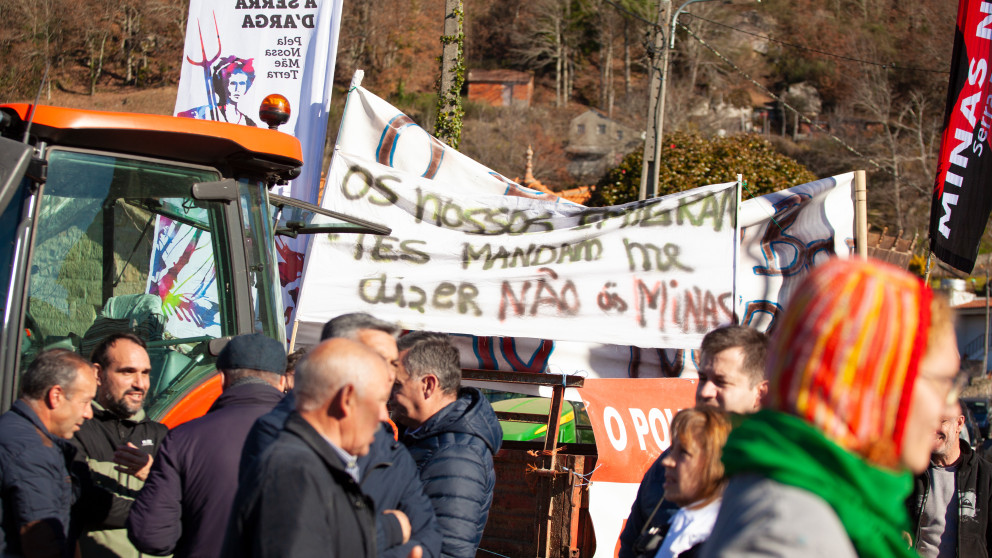
This blog was co-authored by Germán Bersalli (RIFS) and Elisa Thomaset (Humboldt University of Berlin) and INKOTA-Netzwerk e.V.
The European Union’s green and digital transitions are highly dependent on critical raw materials, most of which are currently imported. In 2024, the European Union adopted its Critical Raw Materials Act (CRMA) in response to escalating geopolitical tensions, vulnerable supply chains and import dependencies. The Act aims to diversify supply chains and strengthen Europe’s access to strategic raw materials by promoting domestic extraction, processing, and recycling.
Most notably, a key target of the CRMA is to source at least 10% of the EU’s strategic raw material needs domestically by 2030, lessening reliance on external sources. This policy shift has reignited debates about the role of domestic mining in a just green transition. However, these discussions are frequently informed by flawed assumptions that warrant closer examination. This blog post explores four of them.
Myth 1: Domestic mining replaces imports
The CRMA's 10% domestic extraction target is relative to rising demand, not absolute. Projected increases in raw material use mean domestic mining will likely supplement rather than substitute imports.
This distinction is crucial. The debate is often framed as a choice between mining in Europe and mining in the Global South. In reality, the CRMA does not envision such a substitution. Mining in current extracting countries is expected to continue and even expand, while new mining projects emerge within Europe.
Myth 2: European extraction is inherently more just
Extraction within Europe is often presented as more responsible due to the EU’s comparatively strong environmental and labour regulations.
However, this argument overlooks important limitations. While environmental and labour standards may be higher, economic benefits from mining tend to be concentrated among companies and shareholders, while local communities frequently bear disproportionate environmental, health and social risks. The revision of the European Water Framework Directive, and the proposed loosening of environmental standards in response to industry demands, further undermines this argument. Unless the underlying governance model is transformed, simply shifting extraction geographically will not automatically advance resource justice. Rather, it risks reproducing extractivist patterns in a new location.
This blog post is part of a series on the 2025 RIFS Conference "Tough Conversations in Tough Times".
Myth 3: Domestic mining is inevitable if we want to achieve climate neutrality
A dominant narrative presents mining as an unavoidable prerequisite for the decarbonization of the European economy and achieving climate neutrality. Yet this perspective naturalizes rising material demand and side-lines alternative approaches based on sufficiency, demand reduction and changes in consumption patterns.
Given that global resource use, particularly in the Global North, is the main driver of climate change, biodiversity loss and pollution, the need to reduce primary raw material demand and consider demand-side solutions lies at hand. However, the CRMA largely overlooks this dimension, prioritizing supply-side approaches to ensure security of supply.
Myth 4: Local resistance is driven by NIMBYism
The recent surge in exploration projects has triggered the formation of numerous citizen initiatives across Europe. Their concerns typically focus on a lack of transparency, insufficient public participation, environmental impacts, health risks and potential economic burdens for affected regions. Nevertheless, opposition to mining is frequently dismissed by industry representatives and even some NGOs as "Not In My Backyard" (NIMBY) behaviour.
Such labelling risks delegitimizing local concerns before they are seriously considered. It also obscures the fact that resistance often reflects substantive critiques of decision-making processes and distributional injustices rather than simple self-interest.
Towards a just raw materials governance in Europe
The expansion of domestic mining in Europe offers an opportunity to critically examine the foundations of the EU’s resource-intensive green transition. Without challenging the premise of ever-increasing demand for raw materials, domestic mining risks replicating extractivist practices in a new geographic context rather than advancing genuinely sustainable and just raw materials governance. In this context, there is a need to return to the core pillars of resource justice, including the preservation of livelihoods, demand reduction, just exchange and compensation for disadvantages.
At the same time, collaboration among civil society actors across local, national and transnational levels must be strengthened. As green extractivist narratives continue to shape the renewed debate on domestic mining, and as the spaces for civil society intervention shrink, alternative pathways towards a just green transition —a truly socio-ecological transformation— are increasingly marginalized by powerful industry stakeholders. Growing pressure on human rights and environmental NGOs, coupled with limited funding opportunities and restricted scopes of action, is hampering their ability to challenge dominant narratives. These developments pose a growing threat to democratic governance and the protection of human rights.
A more productive debate is to be had by moving beyond the question of where mining takes place – in Europe or the Global South – and focusing instead on how it is governed: Under what conditions should mining occur, both in Europe and globally? For what purposes should extracted materials be used, and are there viable alternatives? How can the rights of local communities and environmental protection be safeguarded without positioning them in opposition to one another?