Fieldwork in Unjárga: How young people imagine a sustainable Arctic future
19.03.2026
In February 2026, the research group “reIMAGINE Arctic Research” organized and hosted a workshop in Várjjat/Varangerbotn (in the municipality of Unjárga/Nesseby), Norway, in cooperation with the Saami Council. The workshop was conducted as part of the EU-funded BIRGEJUPMI project and explored young people’s visions of their future in Finnmark, the Norwegian county set on the land of Sápmi, the homeland of the indigenous Sámi people.
Part of the work that the research group is doing in BIRGEJUPMI is concentrated in the work package
“Local and global futures: young people’s visions of sustainable livelihoods and inclusive environmental decision-making" that aims at addressing and understanding key challenges faced by local youth related to sustainable and inclusive futures in the Arctic, focusing on the communities of Unjárga/Nesseby and Bearalváhkki/Berlevåg.
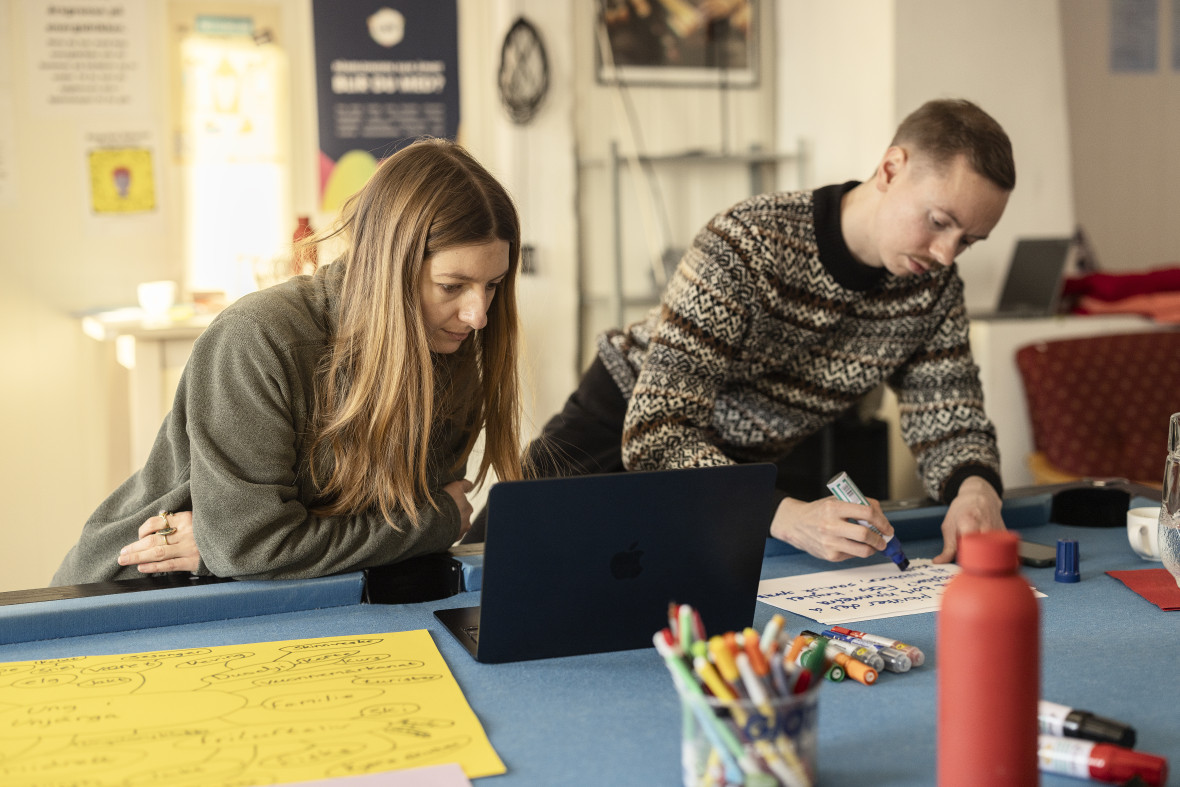
There is a lot of talk about the future and present of the Arctic, yet young voices are not always given a place to speak or to be heard. With this project, we try to create a space for young people to reflect and share their ideas on such topics. Researchers Ilaria Sartini (Research Institute for Sustainability at GFZ) and Per-Henning Mathisen (Saami Council) spent a week in Unjárga planning and hosting the youth workshop.
Workshop in Unjárga: How do you envision your future?
The workshop was held at a youth club in Várjjat and provided a space for youth to talk about their experiences of life in Unjárga and how they envision their futures as Sámi youth – in particular in terms of their relationship to birgejupmi. Birgejupmi is not just the title of the project, it is a North Sámi concept that indicates the ways to manage/get by: the idea of self-sufficiency. It embodies the principle of taking only what is necessary from nature, ensuring the ability to harvest again in the future. It also refers to the interconnectedness of humans, animals, plants and the environment. The concept of birgejupmi formed a leitmotif in the workshop’s discussions around the themes of sustainability, futures, and the participants’ understandings of homeland.
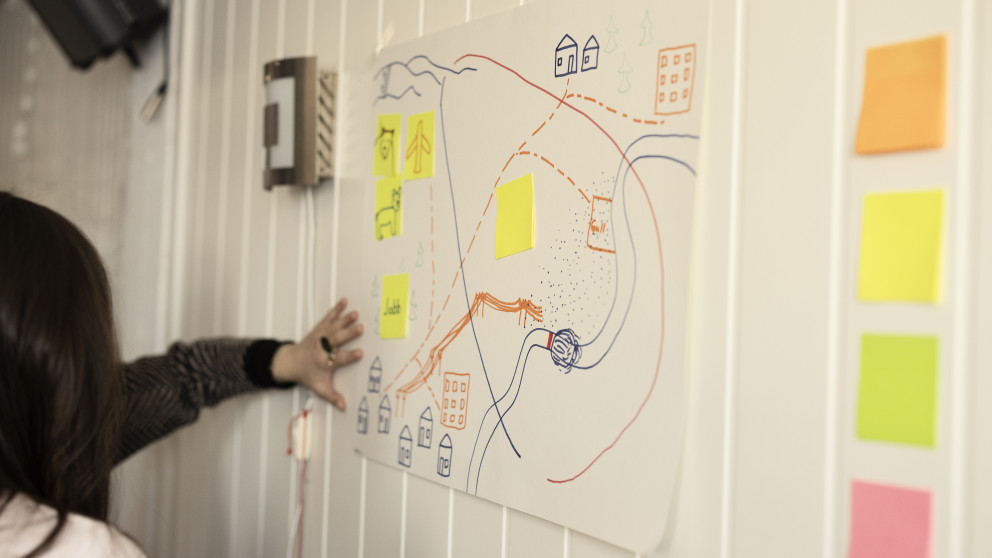
The workshop was facilitated by Per-Henning Mathisen (who is from Unjárga himself) and Ilaria Sartini, together with co-facilitator Petra Laiti (Saami Council), who led the activity “The Grazing Game”, in which participants were invited to draw an imaginary landscape on which they placed infrastructure and industrial activities, illustrating the encroachments on Sámi reindeer grazing lands.
What emerged during the workshop is the importance of the participants’ relationship to the land, to traditions and Sámi culture and practices as a way to live well and of being well. Moose hunting, fishing, berry picking, and duodji (Saami traditional handicraft) are oftentimes group activities and are ways of connecting, building relations, exchanging stories, memories and knowledge, as are learning the Sámi language and local dialects. They are a way to get to know one’s homeland and bond with family and community members. In these uncertain times, it was impactful to see how the themes of identity, belonging, and wellbeing took centre-stage in the young participants’ explorations of the future.
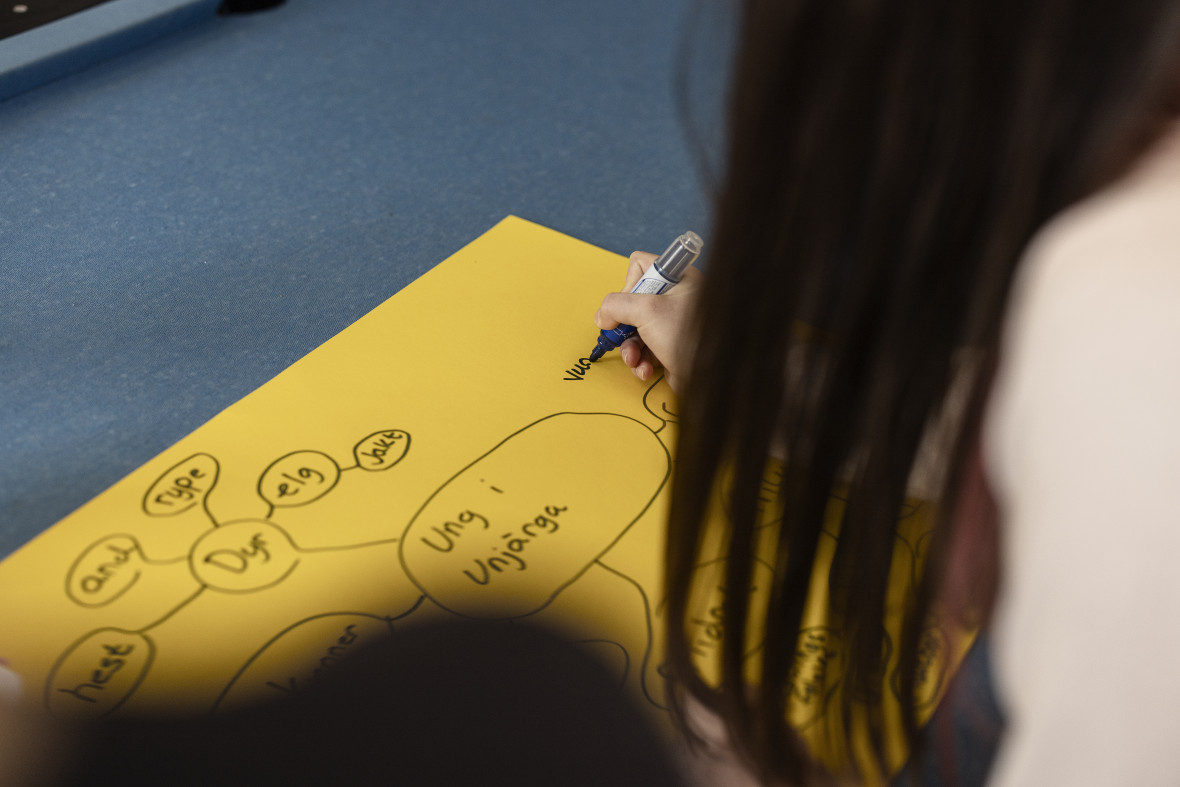
The participants chose to share their discussions and insights from the workshop with the wider municipality and their peers. To this end, we will create a visual collage featuring photographs taken by participants, representing the places, activities, and themes explored during the workshop. The collage will be accompanied by descriptive texts and mind maps to better communicate their perspectives.
Visit to Bearalváhkki/Berlevåg: Planning the next youth workshop
During our fieldwork, we also visited Bearalváhkki/Berlevåg, where the next workshop will take place on 25 March 2026 at the youth club. We met with a local school teacher to discuss and coordinate the upcoming workshop, which will again focus on how local youth envision a sustainable future.
Engaging in research that is relevant for the communities where we work is a guiding principle of the BIRGEJUPMI project. We decided to focus on these two communities at the suggestion of one of our colleagues, who is a native of Unjárga. Despite their differences, both municipalities are experiencing high rates of youth emigration. Like many other regions in the Arctic, their ecosystems and social structures are increasingly impacted by climate change, mitigation efforts, and the resulting consequences. These are topics of great interest also for local municipalities and institutions and we hope that our contribution can be useful for them as well.