Municipal Heating Transitions: Few Disputes, Slow Progress
12.02.2026



Co-authored with: Judith Bremer
When the first draft of an amendment to the Building Energy Act (GEG) was leaked to the public in spring 2023, it caused a considerable stir and was met with demands that the government drop its “heating hammer”—some outraged critics even saw an "energy Stasi" in the making. The proposed ban on the installation of new oil and gas heating systems was particularly controversial. In the face of fierce opposition to the legislation, the governing coalition weakened many of the bill’s provisions.
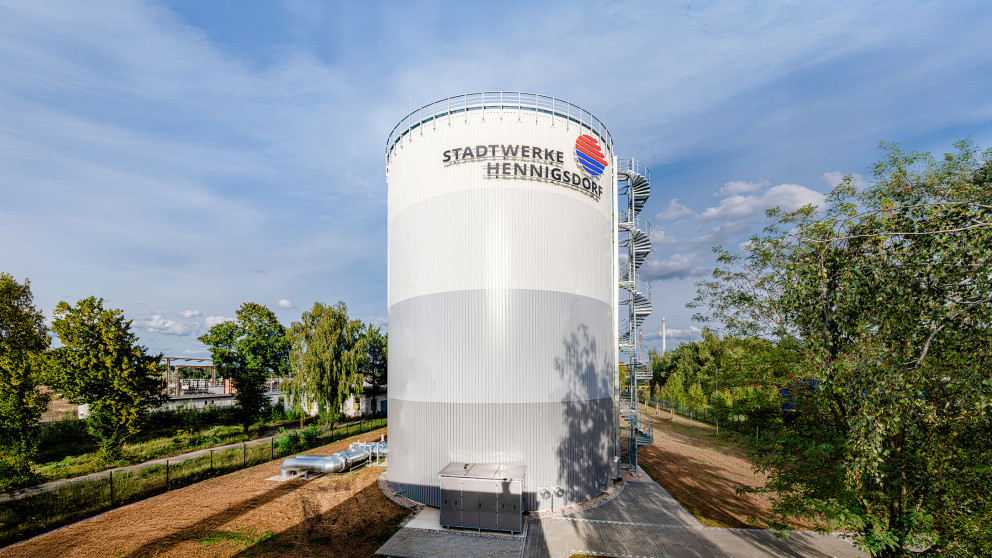
Given the heated debate, it's easy to assume the controversy surrounding the GEG continued to simmer among the local authorities tasked with overseeing the heating transition on the ground. However, that hasn't been the case. In the research project "Geothermal energy and storage in regional heat planning: barriers, opportunities, and stakeholder perspectives in comparative case studies", RIFS conducted case studies in four municipalities (Hennigsdorf and Neuruppin in Brandenburg, Karlsruhe and Bruchsal in Baden-Württemberg) and found few signs of conflict.
Deep geothermal energy is an important component of the heating transition in many municipalities, as its potential is significant. In the four municipalities analysed, deep geothermal energy and geothermal storage are already being used or are being investigated as an option. The advantages of this technology lie in particular in its ability to deliver a continuous, carbon-neutral energy supply.
All four municipalities are essentially focusing on three approaches to shaping the heating transition: 1. the expansion of district heating networks and the decarbonisation of heat generation. 2. the (expansion) construction of local heating networks. 3. supporting decentralised solutions for the heating transition (heat pumps, energy-efficient renovations). The municipalities studied here are at different stages of the heating transition. While the two municipalities in Baden-Württemberg have finalized their municipal heating plans in accordance with state law, Hennigsdorf and Neuruppin are already pushing ahead with efforts to expand their district heating systems.
A large deep geothermal project is under construction in Neuruppin and is expected to supply around 70 per cent of the town’s district heating needs in future. A deep geothermal plant has been in operation in Bruchsal since 2019, which has so far mainly produced electricity and provided heat for individual consumers and sub-networks; as part of the planned expansion of the district heating network, it is expected to supply a significant share—around two thirds according to plans—of the network’s heat requirements in future. In Karlsruhe, sites for deep geothermal energy are being explored and investigations into deep geothermal storage are being carried out, with the latter also being examined as an option in Hennigsdorf. Approaches to the heating transition vary depending on local circumstances, both in terms of technology and public involvement. For example, local authorities hold regular public forums in Karlsruhe, while in Hennigsdorf residents were given the opportunity to invest in a heat storage system. This highlights that the municipal heating transition is a process of experimentation, seeking solutions that are both climate-neutral and socially equitable.
However, time is a critical constraint for municipalities. While more than half of the energy used in the electricity sector comes from renewables, they account for less than 20 per cent of the energy used nationwide in the heating sector. Planning heating networks and installing new systems often takes a long time, and it can be difficult to accurately assess the pros and cons of different options in advance. Recent events have demonstrated that the price of energy sources like natural gas can fluctuate significantly. Despite this volatility, decisive action is needed now to achieve climate neutrality by 2045 and fully decarbonize the heating sector. It’s encouraging to see that the political controversy surrounding the GEG hasn’t hindered progress at the municipal level, where discussions are generally more pragmatic and focused on achieving results. Concerns about the climate have become less of a priority, with a growing emphasis on utilizing local and regional resources to generate economic benefits for municipalities. This also supports medium- and long-term strategies to mitigate the impact of rising fossil fuel prices. However, time is running short, and there are growing concerns that the climate targets for the heating sector are unlikely to be met on time.