Ecosystem-based Management of Deep-sea Mining (MiningImpact 3)
Duration

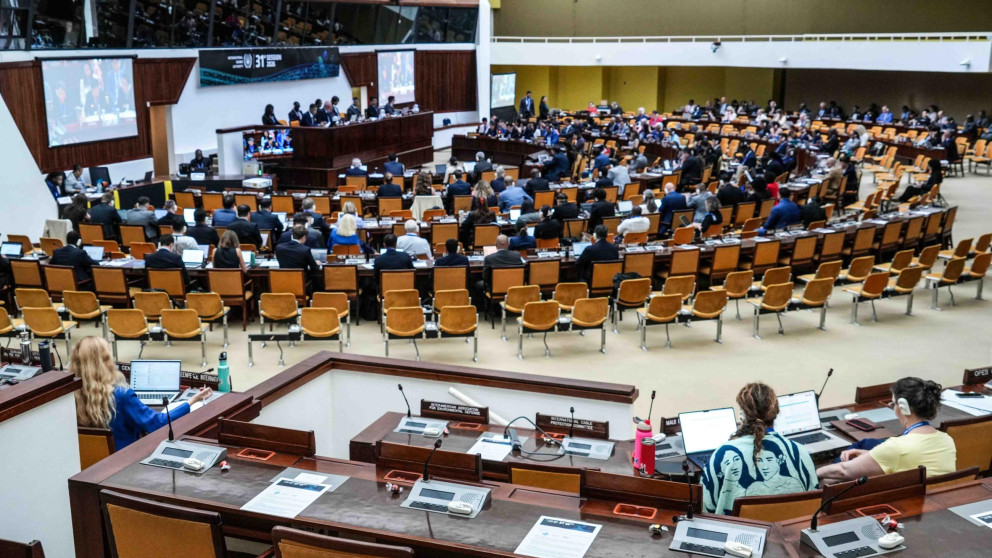
As a consortium partner of MiningImpact-3, a project of the Joint Programming Initiative (JPI) Oceans of the EU, the RIFS conducts research on the international ocean governance regime and the regulations and processes established and implemented by the International Seabed Authority (ISA). The contribution aims to develop recommendations for the introduction and implementation of 'ecosystem-based management' within the ISA governance framework.
The majority of the ocean is classified as “areas beyond national jurisdiction” and is therefore governed though international cooperation. This pertains not only to the high seas, but also to the ocean floor with its mineral resources. The International Seabed Authority (ISA) is currently developing rules for their exploration and potential exploitation, while seeking to ensure protection of the marine ecosystems. Under international law, specifically the United Nations Convention on the Law of the Sea, States are obligated to protect and preserve the marine environment and the international seabed (the ‘Area’) is defined the common heritage of humankind. Thus, any activities to exploit mineral resources in these areas are subject to internationally agreed regulations, adhere to strong environmental safeguards and potential benefits are to be shared among all of humanity.
Mineral resources in the deep sea were found to contain copper, nickel, manganese, cobalt and rare earth elements and have gained the attention of States and private companies - but international regulations and standards for possible exploitation of these resources do not exist. Such regulations and standards are currently being negotiated globally within the ISA.
Ecosystem-based management within the regime of the ISA
As a relatively new paradigm in environmental governance, “ecosystem-based management” integrates ecological, social, and economic objectives to regulate human activities in a comprehensive manner and defines principles, elements, and tools for the holistic, proactive management of such activities. Although the International Seabed Authority provides for an “ecosystem approach”, this has not yet been comprehensively addressed or implemented. RIFS’ contribution in MiningImpact 3 aims to develop insights and recommendations for implementing “ecosystem-based management” within the framework of the ISA’s governance system. RIFS will apply qualitative social science methods and co-creative approaches of transdisciplinary sustainability and governance research to examine options, understand the implications and co-develop suggestions for operationalizing ecosystem-based management within the regime of the ISA. This includes participant observations of relevant governance processes. The results of the research will be presented to the delegates and governing bodies of the ISA.
The overarching JPI Oceans project MiningImpact 3 aims to gain further insights into marine ecosystems associated with polymetallic nodules and massive sulphides on the seabed, their vulnerability and resilience to deep-sea mining and close existing knowledge gaps. MiningImpact 3 builds on two previous phases and includes a complete work package dedicated to governance and management tools. It brings together social, ethical, ecological, technological and regulatory expertise. One of the questions is how Digital Twins could be used for synthesising environmental information, draw learnings from historical resource management and governance approaches and examine the relation of the international governance of deep-sea mining to other regimes. Connecting to several work strands of the MiningImpact 3 project, RIFS’ contribution seeks to advance the governance framework of the ISA for ecosystem-based management.