Tools for Overcoming Riverine & Marine Litter: Solutions for Clean BAltic Sea and NOrth Sea
Duration
Tools4CleanBANOS contributes to the EU Green Deal and EU MISSION OCEAN 2030 targets to reduce plastic litter by 50 per cent and microplastics by 30 per cent in the marine environment, including the Baltic Sea and North Sea. The project will deliver a digital knowledge-to-action toolbox - co-designed, developed, evaluated and tested with key stakeholders and end users. This practical tool will support authorities to implement EU, national, and local policy objectives, enabling them to identify, select and implement valuable solutions to overcome plastic pollution challenges. The knowledge-to-action toolbox will help to identify litter sources and pathways, collection and prevention opportunities, as well as considerations regarding technical requirements and environmental and socio-economic impacts.
Funded under Horizon Europe and coordinated by VLIZ - Flanders Marine Institute, the project brings together 20 partners over the next four years.
Aim
- To contribute to the EU targets in Restoring our Oceans and Waters by 2030, through a knowledge-to-action toolbox that provides environmentally sound solutions for marine litter and plastics pollution prevention, detection, and remediation in areas before litter and plastics can enter seas and oceans.
- To offer public authorities practical options to identify and analyze litter hotspots and problem areas in an effort to implement relevant management solutions and mitigate marine litter and plastics pollution.
- To establish wide and easy access to the knowledge-to-action toolbox and replication of its solutions by public authorities and other relevant stakeholders in Europe through a strong citizen and stakeholder engagement approach, a targeted dissemination and communication strategy, as well as an ambitious exploitation plan including financial support to third parties.
Co-designing the knowledge to action toolbox
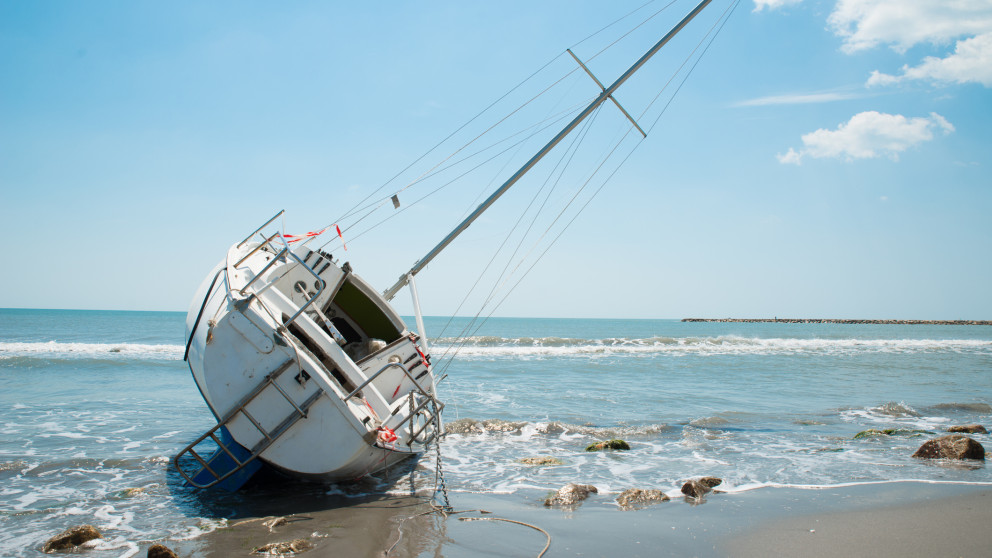
The toolbox will be co-designed and tested in five cases, each focusing on a different type of plastic pollution. In Kiel, Germany, partners will focus on lost and discarded fishing gear. In Riga, Latvia, the target is cigarette butts on beaches. Rotterdam, in the Netherlands, will work on reducing plastic across its river delta, while Oslo, Norway, will look at microplastics released by car tyres and collected in snow. The fifth case in Portsmouth, UK, will focus on end-of-life boats dumped and abandoned in the marine environment. Other regions will then be able to apply for funding under the same project to adopt those solutions.
RIFS leads work on co-designing theTools4CleanBANOS knowledge-to-action toolbox. This work seeks to anchor the toolbox in EU policy, assuring that policy recommendations and solutions derived from the toolbox underpin progress towards policy objectives to address marine plastic pollution. Further, RIFS researchers will facilitate the co-design of the toolbox with policy makers and key actors from national and EU level bodies and organizations, helping to develop a toolbox that is designed to tackle real-world problems with practical and implementable management solutions. Ultimately, co-design efforts aim to ensure that the toolbox is effective, meeting the demands of stakeholders, as well facilitate the uptake of the toolbox past the life of the project by building a community around its application.