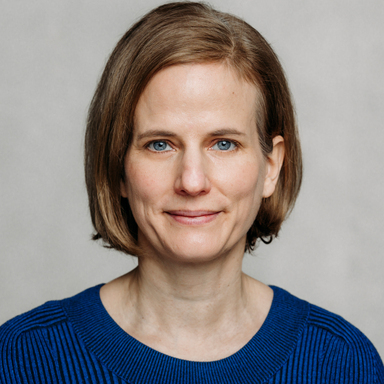
Jennifer Morgan on the Future of International Climate Governance
17.09.2026
How is international climate governance changing in an increasingly fragmented geopolitical landscape? And what role can multilateral cooperation still play in advancing climate action? In a RIFS Tuesday Talk, Jennifer Morgan, Germany’s former Special Envoy for International Climate Action and a longstanding civil society leader, shared her perspective on these questions.
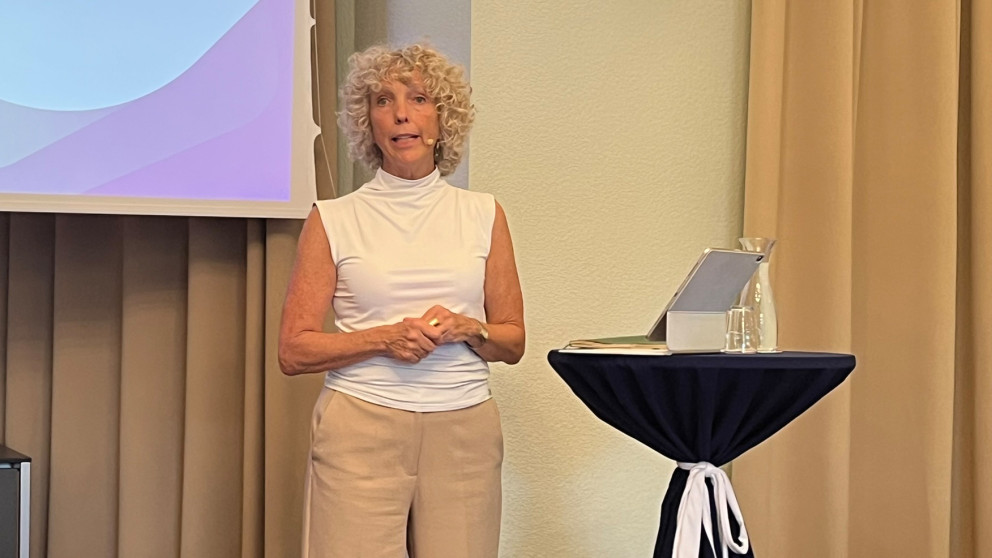
Morgan’s talk, The Future of International Climate Governance, kicked off this year’s Potsdam Summer School, which is dedicated to the theme “Sustainability Meets Geopolitics: Managing the Global Commons in Times of Great Power Rivalry.” The Summer School brings together early-career scientists and professionals from different countries and sectors to explore how geopolitical shifts are affecting efforts to advance sustainability.
Climate governance in an era of geopolitical competition
Morgan argued that international climate governance is not simply in crisis or approaching collapse. Instead, she described a rapidly evolving landscape: “Climate governance is no longer an isolated diplomatic issue. It has moved straight into the heart of national security, trade, industrial strategy and geoeconomics.”
She identified several key shifts within the broader context of international climate cooperation, most notably the rise of BRICS+ as an alternative forum for international diplomacy and cooperation, changing perceptions of energy security, the disruption of multilateral cooperation on climate by the Trump administration, China’s dominance in many clean-technology supply chains, increasing trade tensions and protectionism, the rising economic costs of climate impacts, the mounting debt crisis – especially in the Global South – and changing priorities in European public finance.
At the same time, Morgan emphasized that the Paris Agreement continues to fulfil important functions. These include setting collective goals and providing a common direction, as well as ensuring universal participation and legitimacy.
From fragmentation to a more polycentric system
Rather than viewing the growing number of initiatives outside the UN climate process simply as signs of fragmentation, Morgan described the emerging system as increasingly polycentric: multiple governing levels and authorities interact at different scales, from local municipalities to international bodies. But there is also a shift towards external fora outside the UNFCCC, such as trade bodies, financial institutions and plurilateral clubs.
This development can help integrate climate action into economic and industrial policy, she argued. But it also creates risks, especially for countries with fewer financial and diplomatic resources. “The one piece that worries me in this very geo-economic world, with all these different initiatives, is the position of the small island states and least developed countries. Polycentric governance only works if it is inclusive. So, I think there needs to be an extra effort to include them in various initiatives and to support their initiatives.”
The role of Europe
A substantial part of the talk focused on Europe and its position in a changing geopolitical environment. Morgan argued that Europe needs to adapt to a world in which economic and geopolitical power is becoming more distributed.
“Europe has to be more equitable, more strategic and more aligned in the way it works with partner countries and with emerging and developing economies. We are not in a world where you simply extract what you need from a country and they don't get anything back. It has to be about joint value creation. It has to be on an equal footing.”
She also highlighted the need for greater coordination among European institutions and financial instruments, as well as closer alignment between trade, climate and industrial policies.
Looking ahead
Morgan concluded by emphasizing that international climate governance is evolving rather than disappearing. The challenge, she argued, is to understand how the different institutions, coalitions and initiatives that make up this increasingly polycentric system can work together and contribute to the pace and scale of transformation required.
Contact