Community and Wildlife Conservation: Combating Poaching in South Africa
27.05.2026
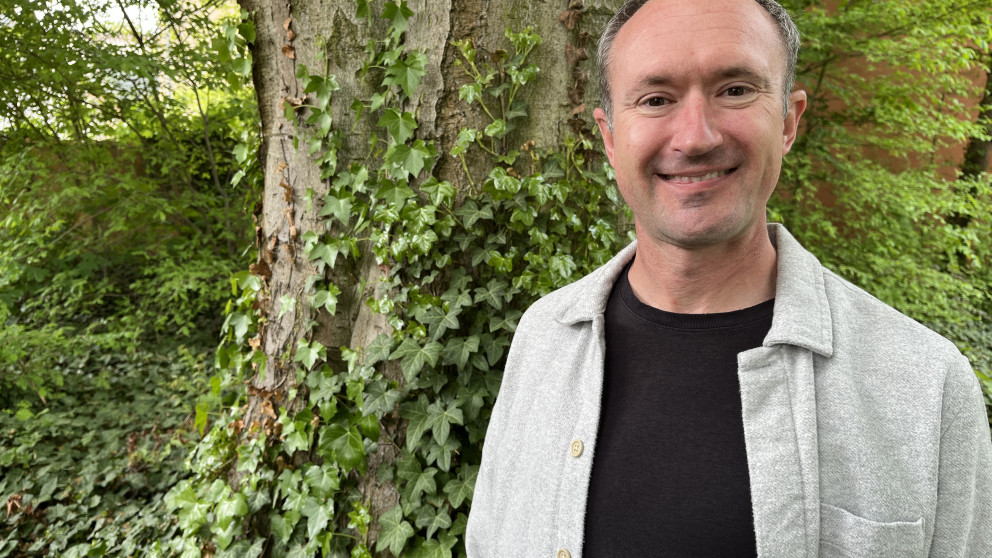
Jeremy Fackenthal, a new Fellow at RIFS from the USA, is conducting research in South Africa into how local communities can work together to protect their natural environment. His project focuses on a conservation initiative in KwaZulu-Natal, where conservationist Grant Fowlds is collaborating with local Zulu communities in establishing conservancy structures that benefit local communities by providing incomes and employment. Fackenthal is documenting these approaches through a film and a research project in which he is developing global ‘best practices’.
It all started by chance: whilst working for an environmental organisation, Fackenthal met the conservationist Grant Fowlds, who lives and works in South Africa. Fowlds grew up on a ranch, speaks Zulu, and had a problem: his game reserve in KwaZulu-Natal was under threat from poaching. “Grant understood that poaching often stems from poverty,” explains Fackenthal. Financial participation — through revenue-sharing from tourism or sustainable agriculture — can benefit local communities and enable them to become less reliant on poaching. “It’s a risk, but the communities decide for themselves whether to get involved,” says Fackenthal.
However, the reality is complex. Not all of the Zulu communities embraced the proposal. “Some felt threatened,” says Fackenthal. “They feared that Fowlds might take their land away from them.” Fowlds’ solution: months of discussions with tribal elders – “…it takes time for people to realise that he isn’t there to control them,” explains Fackenthal.
The method: film and research
Following conversations with Fowlds in 2023, Fackenthal is documenting the collaboration between the conservationist and Zulu leaders. “The film is intended to evoke emotions, not just present facts,” he emphasises. In addition, Fackenthal is analysing the communication strategies at play, exploring how trust is built and decision-making organised in communities. Ranger Nomphilo Larota, who acts as a translator and interpreter for the film-maker, will play an important role in this process. “Her Zulu is perfect, and she understands both worlds,” says Fackenthal. The film will show how Larota helps communicate the benefits of conservation for the communities.
Fackenthal plans to continue filming on location with local communities throughout September 2026. There will be interviews with tribal leaders and community members to present their perspectives. He plans to carry out most of the filming himself, using two cameras and a small lighting kit, and will be based at a small hut for volunteers, with running water and electricity. The game reserve is home to elephants, zebras, buffalo, wildebeest, leopards, giraffes and various species of gazelle.
Future prospects: From game reserve to global method
The project is designed as a comprehensive research initiative and aims to produce a white paper, a specialist article, and a short documentary. Fackenthal wants to document developments on the ground and identify best practices. However, he does not wish to highlight only the successes, but also to identify challenges and mistakes in order to provide valuable insights to other conservationists. “The aim is to produce a handbook,” he says, “to show others how communities can be involved.” For the significance of the project extends beyond South Africa: Fowlds’ approach – viewing communities as partners rather than adversaries – could prove decisive for regional conservation initiatives in Africa, Latin America and Asia.
According to Fackenthal, the project shows that conservation can succeed in the long term provided local communities actively contribute. But this is also more than a scientific study, explains Fackenthal; the project reflects his personal commitment to nature conservation and the promotion of sustainable coexistence between humans and animals. His stated aim is to tell a story that inspires and calls for action.
