Climate Facts Paper: How the Climate Crisis Can Be Solved
09.11.2026
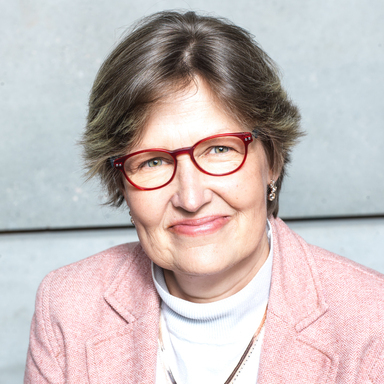
A new fact paper has been published to coincide with the COP31 UN Climate Change Conference in Antalya. Issued by the German Climate Consortium (DKK) and Klimafakten, it summarizes key findings from the social sciences and humanities on how the transition to a climate-friendly society can succeed. In the paper, RIFS Scientific Director and co-author Doris Fuchs argues for expanding climate-friendly infrastructure that would benefit lower income households in particular.

Climate action is currently being held back by new fossil fuel subsidies, the rollback of existing climate measures, and a dearth of media coverage. “We need climate policy that is far more ambitious, reliable in the long term, and designed to make climate-friendly choices easy and attractive,” says Professor Angela Oels, chair of the DKK and professor at the Center for Climate Resilience at the University of Augsburg.
As things stand, it seems unlikely that Germany will achieve climate neutrality by 2045. “But that is no reason to give up,” says Tilman Santarius, professor of social-ecological transformation and managing director of the DKK. “Rather, social science research shows how far societal trends and political and economic conditions need to change — but also how far they can change — if the Paris climate goals are still to be met. The new climate facts paper brings together the wide range of solutions available today.”
Social justice
Climate policy is more likely to succeed if its costs and benefits are shared fairly. “Until now, subsidies for electric cars and for heat pumps in owner-occupied homes have mainly benefited high-income households. Investment in buses and trains or in municipal heating networks, by contrast, also benefits people on lower incomes. Support is correspondingly broad: 79% of people in Germany are in favour of expanding climate-friendly infrastructure,” says Professor Doris Fuchs, member of the DKK Board and Scientific Director of the Research Institute for Sustainability at GFZ (RIFS) in Potsdam. A fair balance is needed internationally too: countries have contributed to climate change to very different degrees and have very different capacities to curb it.
As the umbrella organization for climate research in Germany, the German Climate Consortium (DKK) brings together 26 research institutions and promotes dialogue between policymakers, business, and the public. Its aim is to develop science-based options for strengthening climate action and dealing with climate impacts.
Climate action: The key facts in just 61 words
- Coal, oil, and gas are the main problem.
- The more you have, the more CO₂ you emit.
- Misguided incentives and fossil fuel interests are holding us back.
- Solutions exist — and are often cheap.
- Most people want more climate action, and want it to be fair.
- Policymakers must act.
- Every tenth of a degree counts.
Download the fact paper (German only) on the DKK website: https://www.klimafaktenpapier.de/