Care as a Guiding Principle: Anthology Offers Inspiration for Ukraine's Reconstruction
09.01.2026
Despite the Russian attacks, life in Ukraine goes on. Ensuring access to electricity, water, and medicine remains a priority, but reconstruction extends far beyond these immediate needs. It also encompasses the redefinition of power relations, cultural identity, and ecological recovery. An anthology edited by RIFS Fellow Anastasiia Zhuravel sheds light on the political, ethical and aesthetic dimensions of reconstruction.
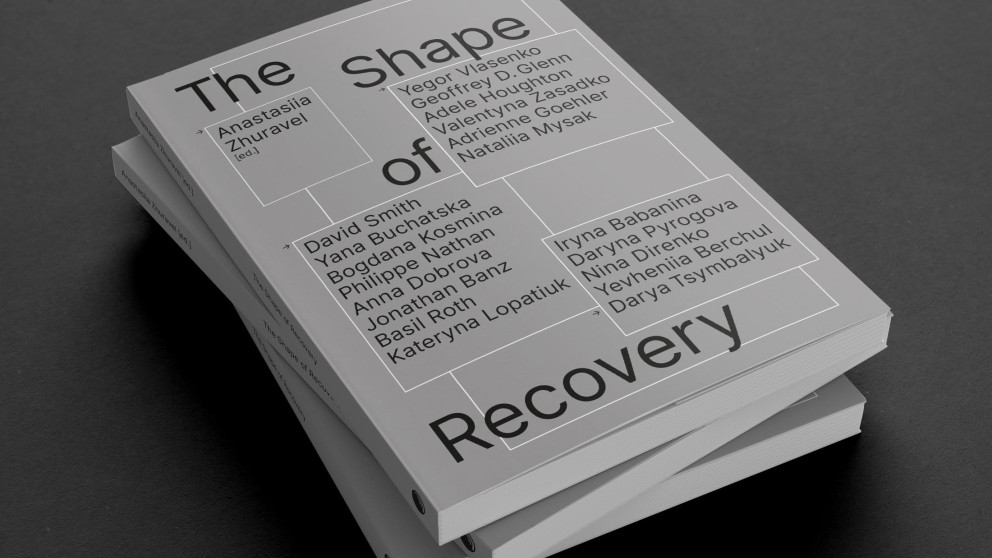
The publication — The Shape of Recovery — approaches Ukraine’s reconstruction not as a straightforward process of restoring destroyed infrastructure, but as a multi-layered transformation process that encompasses the reconfiguration of relationships, the redistribution of power, and a reimagining of communal life. Spanning three interconnected themes, the anthology shows how experts, researchers, and communities are working to restore the country’s social and ecological foundations under conditions of war and uncertainty.
The first section examines how government, state institutions, and community life evolve when civic engagement and decentralised structures take centre stage. It looks at how communities and institutions at local, regional, and national levels are collaborating to strengthen governance while restoring trust and participation — two essential elements of a resilient democracy. Reconstruction is framed as a task for civil society, in which power is shared and new forms of collective responsibility emerge.
The second section focuses on housing and urban reconstruction. Architecture and urban planning are presented not merely as technical challenges, but as opportunities to rethink and renegotiate care, security, and belonging. In the face of displacement and scarce resources, design becomes a tool for adapting to circumstances and envisioning a better future. Discussions range from affordable housing and sustainable, resource-efficient construction to more participatory approaches in architecture. In this view, the built environment is both essential infrastructure and a social practice that reflects the shared process of recovery and rebuilding.
The third section addresses ecological transformation. The war has inflicted severe damage on Ukraine’s rivers, forests, and soils, leaving landscapes that also bear witness to violence. Destroyed ecosystems, water scarcity, and pollution raise pressing questions about how restoration can be carried out responsibly and equitably. This section shows how damaged environments can become starting points for renewal, linking ecological restoration to issues of justice, memory, and self-determination.
The results indicate that sustainability in the Ukrainian context cannot be reduced to metrics or frameworks, but must be understood as a practice of care — towards the territory, the community and the environment. The contributions collected here resist fragmentation and instead offer a vision of transition rooted in solidarity and hope.
A launch event will take place on 23 January at Café Tiergarten in Berlin.
Contact