How to Govern the Deep Ocean?
27.08.2026



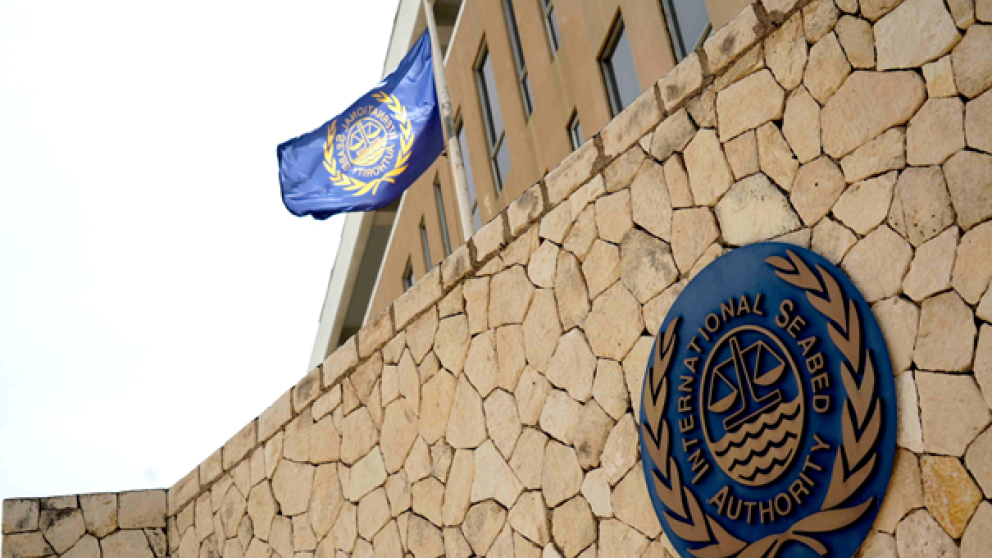
On 13 –31 July 2026, hundreds of delegates from around 85 countries gathered at the headquarters of the International Seabed Authority (ISA) in Jamaica for the ISA Council and Assembly meetings, joined by observers from numerous organizations and institutions. The meetings included continuing negotiations on the Mining Code, a binding set of regulations intended to govern the equitable use of mineral resources and protection of the marine environment in what is known as the Area. Comprising the seabed, ocean floor and subsoil beyond the limits of national jurisdiction, the Area is designated under international law as the common heritage of humankind. The Mining Code remains a “work in progress”, leaving the international community without a regulatory framework or standards for any potential future exploitation of deep-sea minerals such as polymetallic nodules, as negotiations continue into 2027 amidst growing calls for precaution.
RIFS researchers have followed the negotiations closely for over 10 years. Previous research has covered overarching environmental goals, objectives and standards, regional environmental management planning, and benefit sharing, and test and pilot mining, among others. As a consortium partner of the JPI Oceans project MiningImpact 3, RIFS is now investigating how ecosystem-based management can be integrated into the ISA’s governance framework. Ultimately, this research seeks to move the ISA toward a management model that integrates ecological, social, and economic objectives to ensure that deep-sea mining is regulated through a holistic and sustainable approach to the benefit of all. In this blog, we’ll unpack the complex negotiations underway at the ISA regarding deep-sea mining, covering the technicalities of environmental regulation, the cultural and ethical dimensions often overlooked in resource discussions, and the urgent geopolitical tensions arising from attempts to bypass the ISA framework in favour of unilateral mining.
Deep-sea mining in the global ocean – who decides?
Under the United Nations Convention on the Law of the Sea (UNCLOS), the ocean is divided into different maritime zones for governing activities in the ocean, and States have different rights and obligations in these zones. The majority of the seabed lies beyond national sovereignty and sovereign rights, in so-called areas beyond national jurisdiction, referred to as the “Area”. Established in 1994, the ISA is the responsible international organization charged with regulating and controlling activities in the Area. Mineral resources of the deep seabed have been found to contain critical minerals such as nickel, copper and cobalt as well as rare elements, and have gained attention from States and other actors with an interest in exploiting those resources through deep-sea mining. While several States and state-owned enterprises or private actors have already been issued exploration contracts to assess the marine environment around potentially valuable future mining sites in the Area, actual mining (exploitation) has not been authorized. Regulations under which such commercial exploitation would be authorized are currently being negotiated at the ISA (also called Exploitation Regulations, or the Mining Code, see the latest draft).
The ISA has 171 Member States, plus the EU, and is made up of the following organs: the Assembly, the Council, the Secretariat, the Enterprise (still in development), the Legal and Technical Commission (LTC), the Finance Committee, and the Economic and Planning Commission (still in development) (see ISA Website). These organs have different roles and mandates and meet at regular intervals at the ISA headquarters in Kingston, Jamaica. Since 2000, the ISA has been working to develop a comprehensive “Mining Code”, including regulations for exploration (prospecting and exploration) and exploitation (mining). Exploration regulations are in place for three minerals found in the Area: polymetallic nodules, polymetallic sulphides and cobalt-rich ferromanganese crusts. Exploitation regulations on the other hand are not yet finalised and negotiations are ongoing. Member States and observers are now regularly meeting to deliberate how to ensure the protection of the marine environment and guarantee that mineral-related activities are carried out for the benefit of humankind as a whole, including an agreed mechanism for the equitable sharing of benefits in the event of commercial exploitation of the mineral resources of the Area. Unsurprisingly, these topics are highly controversial; States and other actors hold differing views on how to use, share and protect the ocean and its resources in areas that international law understands as the common heritage of humankind.
Negotiating the future of the deep sea
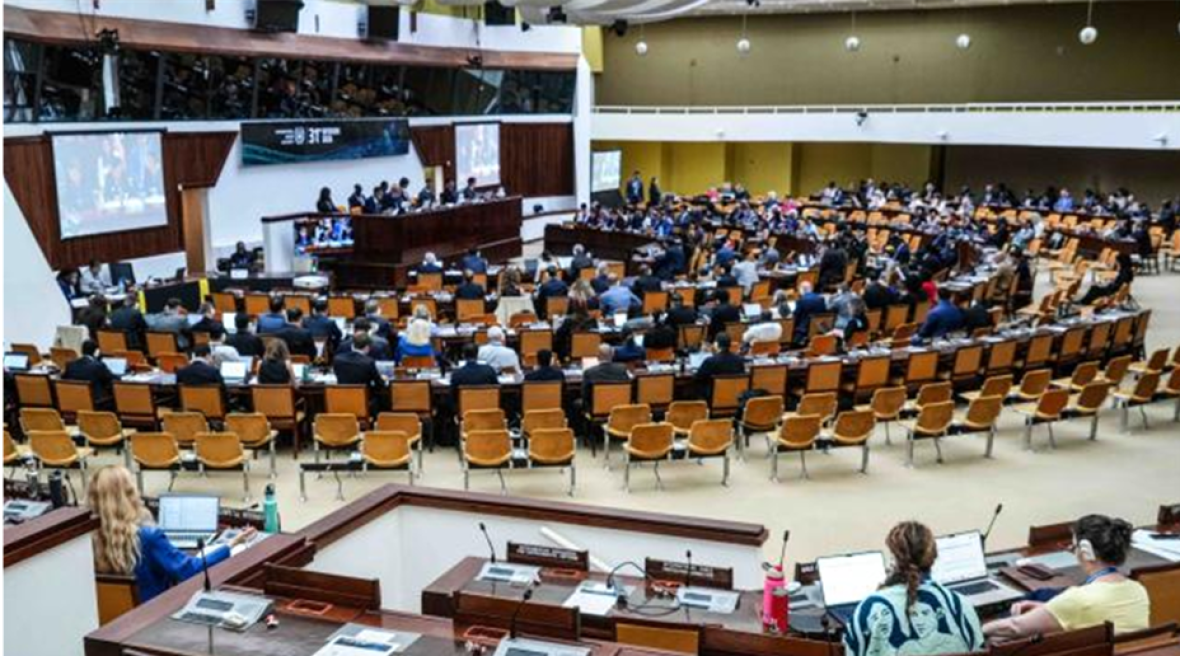
The recent meeting in Kingston, Jamaica represented Part II of the 31st Session of the ISA and included a two-week Council and a one-week Assembly meeting between 13–31 July 2026. The negotiations covered diverse topics and technical aspects of the Mining Code, including environmental safeguards, acceptable levels and thresholds of harm, discussions on how to share benefits of potential profits (if any) from deep-sea mining, and other overarching issues.
Ensuring environmental safeguards within a future Mining Code
Under UNCLOS, if the ISA authorizes commercial deep-sea mining in the future, it must guarantee that the marine environment is protected and preserved. At the latest Council negotiations, States debated different environmental provisions of the Mining Code, including:
- Regional Environmental Management Plans (REMPs): these provide measures and tools to support informed decision-making regarding activities in the Area, mineral resource development and the protection of the marine environment at a regional level. An REMP already exists for the Clarion-Clipperton Zone, a 4.5 million square kilometre submarine fracture zone in the Northern Pacific, and open consultations are ongoing for other regions (North-West Pacific REMP). Discussions focused on how reviewing and updating REMPs – including the establishment of new protected areas – would affect new or existing Plans of Work (i.e. plans outlining mining activities) (joint textual proposal; discussion aid).
- Environmental Monitoring and Management Plans (EMMPs): these lay out how the contractor is supposed to meet the management and monitoring obligations to determine the extent of the planned activity’s impact(s). This includes decisions on (real-time) monitoring and the level of independence from scientific information provided by contractors. Delegations and observers have yet to agree whether EMMPs should cover only environmental impacts, or also socio-economic, cultural, health and transboundary aspects (joint textual proposal; discussion aid).
- Measuring the extent of “harm to the marine environment” requires environmental threshold values. The LTC offered an informal exchange with ISA Council participants on the topic and talked the audience through their studies on toxicity, turbidity, underwater noise and light pollution (report).
- Testing before commercial mining was categorised into Test Mining (TM) and Pilot Mining (PM). Negotiators discussed criteria for differentiating between the two and assigning appropriate regulations. While TM is expected to be undertaken during the exploration phase, PM would occur in the exploitation phase prior to commercial production. However, Council delegations could not find common ground and expressed quite divergent views on the specific objectives of the testing phases, whether and if yes, under which conditions exemptions could be granted and which ISA organ would be tasked with approving the transition between phases and possible exemptions (report; discussion aid).
- A Closure Plan governs the aftermath of mining operations, covering decommissioning, post-mining monitoring, rehabilitation, restoration, and compensation. A key point of debate among Council delegates is whether these plans should be embedded directly into exploitation contracts to ensure contractors remain legally accountable after their activities cease. Recognizing the direct connection, suggestions include the integration of EMMPs and the closure plan (joint textual proposal, discussion aid).
States also deliberated on updated Standards and Guidelines for the Mining Code and on responsibility and liability. Discussions on issues for which no time was ultimately allocated, such as for the Environmental Goal and Objectives, Environmental Impact Assessments, or for an environmental compensation fund (for damage arising from activities conducted under an Exploitation Contract for which the contractor is not liable), are to be continued in the intersessional period and/or the next formal meeting.
Mineral resources of the Area - the common heritage of humankind
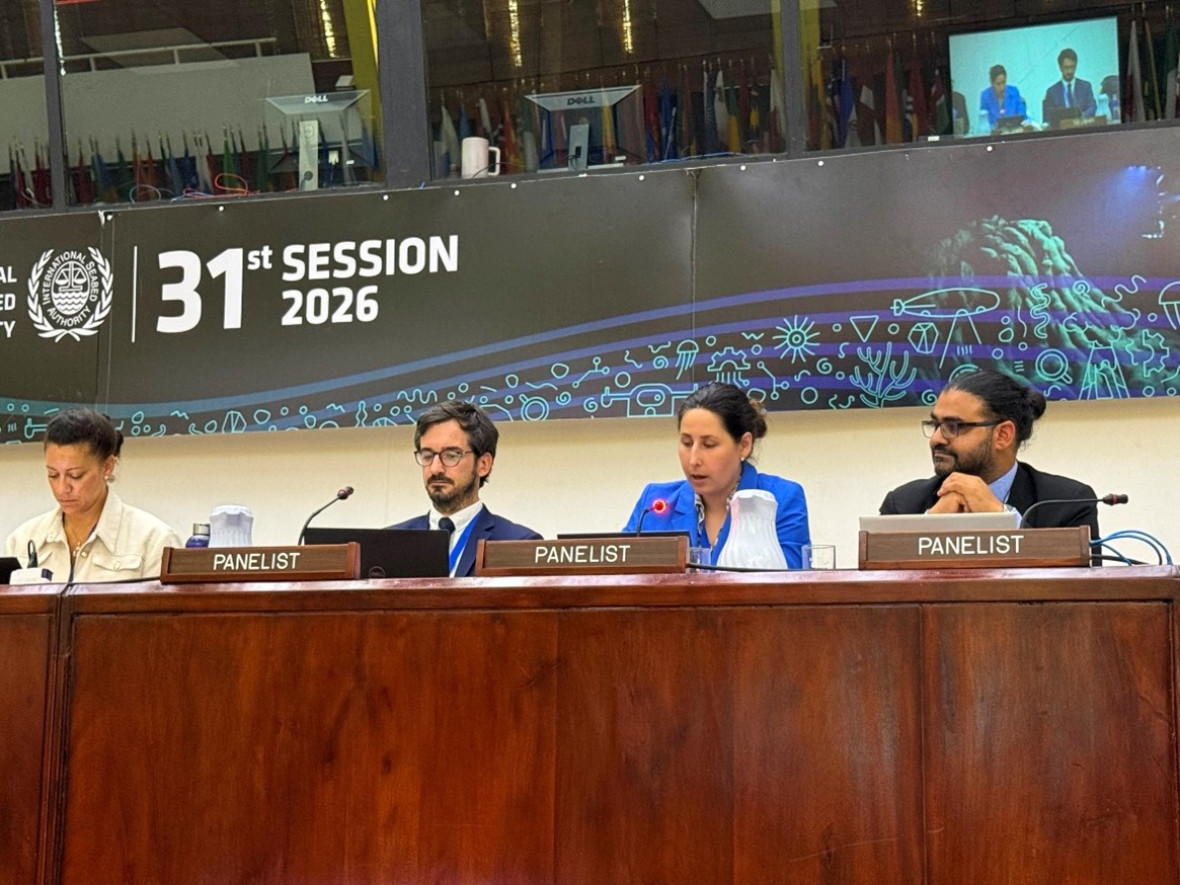
Further discussions focused on translating the principle of the common heritage of humankind into practice. Developing States, in particular, emphasized three key priorities: the creation of “reserved areas” (sites that have undergone prospecting and are set aside for their future access), the activation of organs like the Enterprise and the Economic Planning Commission to ensure their meaningful participation in the ISA, and the establishment of a financial regime and mechanism for the equitable sharing of benefits. While a sizeable number of actors in the negotiations still refer to the common heritage of humankind as carrying purely economic benefits, others pointed out that the benefits of the ocean are to be defined much broader and more all-encompassing than in solely monetary terms.
Cultural dimensions of the deep ocean
The deep ocean may be vast, distant and dark – and yet, cultural connections exist to the deepest parts of the sea. There was broad agreement among States that these connections must not be neglected. The UNESCO Convention on the Protection of the Underwater Cultural Heritage (2001) already acknowledges the importance of underwater cultural heritage as an integral part of the cultural heritage of humanity. States and non-state actors are now discussing the extent to which tangible heritage (e.g., shipwrecks, submerged structures and artefacts) and intangible heritage (e.g., traditional knowledge and living practices) will be relevant in the context of deep seabed mining. Guided by a briefing note and textual proposal for the draft Mining Code, the topic of underwater cultural heritage was discussed intensely at the Council, with broad support to consider this topic further in upcoming negotiations.
Adequate scientific understanding
Generally, any new authorized activity in the Area must be based on an informed decision-making process to assess its impact on the environment and other stakeholders. In the context of deep-sea mining, this is exceptionally challenging, as our understanding of the deep ocean, its ecosystems, and the complex dependencies between species is still in its infancy. Furthermore, 'cumulative impacts' – those that compound over time or combine with other stressors – are difficult to quantify. Consequently, some States argue that a deeper scientific understanding must precede any mining activity. To this end, the Republic of Vanuatu proposed an agenda item to make ‘adequate scientific understanding to support informed decision-making’ a formal requirement. While not tabled at this session, the proposal will be discussed in the coming months to determine what constitutes ‘adequate scientific understanding’ as a knowledge base for activities in the Area.
Mining outside the ISA regime and without internationally agreed rules?
But what happens if a State does not agree with the international regulations and tries to reap the benefits of what the international community has agreed to share and jointly manage? Now that the Republic of Naoero (formerly known as Nauru) has invoked the two-year rule (2021) and the Council's 2023 deadline for adopting exploitation regulations has passed, applications can be submitted for the Council's consideration and, potentially, provisional approval – even though the regulations that would govern these activities have yet to be adopted. No applications for exploitation have been submitted to date however. As was agreed by the Council upon the expiry of the timeline in 2023, negotiations will resume with the understanding that commercial exploitation in the Area should not commence in the absence of ISA regulations.
In April 2025, an Executive Order issued by the US President sought to promote the issuance of commercial recovery licenses in the Area under domestic legislation, thereby facilitating the process for private actors to bypass the ISA regime entirely. Building on a pre-existing but rather dormant US law, the Deep Seabed Hard Mineral Resources Act, and with the US not being Party to UNCLOS and the ISA, this move for unilateral decisions over activities on the US continental shelf and beyond (i.e., in the Area) presents a difficult legal question and has unsettled the international community. It drew sharp criticism from the ISA Secretary-General and numerous Member States, and the Council had subsequently ordered an inquiry in July 2025 to ascertain whether any existing ISA exploration contractors are facilitating these unilateral attempts by sharing data or partnering with unauthorized actors. The LTC had been instructed to conduct a fact-finding exercise, using publicly available information and through consultation with ISA contractors, and to report to the Council on any potential breaches for further investigation. Following litigation brought by two ISA contractors in July 2026 to suspend the inquiry, the International Tribunal for the Law of the Sea (ITLOS) ruled that the investigation could proceed, provided that the ISA established clearer timelines and procedures, and explicitly clarified the due process rights of the contractors.
Meanwhile, the potential of unilateral mining remains a looming threat following recent developments in the US. During the ISA Council and Assembly meetings, many Member States spoke out to emphasize that multilateralism is the only way to uphold international law and the status of the Area and its mineral resources as the common heritage of humankind. The Secretary-General introduced a proposal to seek an advisory opinion from ITLOS to clarify the legal relationship between the ISA and all States – including those that are not Parties to UNCLOS – and define the obligations of Member States to deter and reject unilateral claims. Following an intense discussion, it became clear that the matter deserved further consideration, and it was agreed to continue discussing the viability of this proposal during the intersessional period.
Voices at the negotiations
While the Mining Code is negotiated between States, numerous other actors attend the negotiations and are calling for their voices to be included in decision-making processes. Observers, including intergovernmental organizations, as well as scientists, industry representatives, and environmental activists, regularly contribute to consultations and the broader drafting process. In recent times, Indigenous Peoples and local communities, including Kanaka Maoli (Indigenous Hawaiian), have started to attend ISA meetings, represented through non-governmental organizations. They bring a vital perspective that challenges the dominant profit-based narrative; rather than viewing the ocean as a set of 'resources' to be exploited, they envision a deeply interconnected relationship between humanity and the sea. The question now is whether these voices will move from the side-lines towards the centre of the governance process. At the moment, discussions on the topic of cultural rights and interests revolve around the possibility of establishing a roster of experts on cultural matters to more formally include Indigenous Peoples and local communities. It remains to be seen how, and to what extent, Indigenous and local knowledge systems will be taken into account in future negotiation sessions.
What next ...?
Beyond negotiations on the specific details of the Mining Code, discussions also covered more general policies, including the ISA General Policy on Whistleblowing, the implementation of periodic reviews, the current geopolitical situation with considerations on how to respond to potential unilateral mining activities.
After weeks of negotiations and many hours behind closed doors, the Council reached consensus on a number of issues and the following decisions were adopted:
- A request to the Secretariat to develop a “roadmap” for the continuation of Mining Code negotiations using a thematic approach. This roadmap will be circulated in October 2026 for comment until December 2026, paving the way for its adoption by the Council at its next meeting in 2027.
- A request to the LTC to clarify the process for the inquiry on potential breaches by ISA contractors with respect to any action or attempts to bypass the ISA.
The Council also agreed to continue intersessional work, including through dedicated informal working groups (focusing on thematic areas) and Friends of the President groups (focusing on specific regulations) to develop wording and find consensus on outstanding topics ahead of the next meeting.
While this progress is encouraging, several critical gaps remain. These will be the primary focus of intersessional work and in future sessions, including: the requirements of sponsorship and definition of effective control (i.e. the relationship between a contractor and sponsoring state), acceptable levels of harm, environmental threshold values, procedures for stakeholder consultations, cultural heritage, inspection and compliance mechanisms, the payment system and royalties regime, internalization of externalities, regulatory and procedural safeguards, requirements for the submission, consideration and approval of applications, as well as the financial and operational capacity required of contractors.
Debates continue over the many uncertainties surrounding marine ecosystems in the deep ocean, the potential impacts and effects of resource extraction in these far distant and very special areas, and whether or not mining should take place at all. A growing number of States and a range of observers are calling for a moratorium or precautionary pause until informed decision-making is truly possible.
Discussions in the plenary room and in technical conversations during side events showed that the decisions on whether and how to conduct future mining activities will need robust scientific understanding of the ocean and its ecosystems, and impacts of potential mining activities. Yet, it will also require other forms of knowledge, including traditional knowledge of Indigenous Peoples and local communities and moral and ethical considerations of our actions towards the planet and future generations. Dates for the upcoming meetings for 2027 are the 8–19 March and 12–23 July for the Council and the 26–30 July for the Assembly.
Disclaimer:
Dr. Ina Tessnow-von Wysocki attended the negotiations in her capacity as a consultant for IOC-UNESCO. She is a Research Associate at the Research Institute for Sustainability (RIFS). The views and opinions expressed in this blog are those of the author and do not necessarily reflect the official policy, position, or views of the Intergovernmental Oceanographic Commission (IOC) or the United Nations.
Dr. Barbara Neumann followed the negotiations virtually via the ISA WebTV broadcasting of the Council and Assembly meeting in July 2026. She engages with the topic through the JPI-Oceans research project MiningImpact 3 and RIFS contribution to this project. The views expressed in this blog are those of the author.
Pradeep Singh attended the negotiations in his capacity as Senior Project Manager at the Oceano Azul Foundation. He is a RIFS Affiliate Scholar and previously contributed to RIFS (and formerly IASS) research on deep seabed mining and other ocean governance issues. The views and opinions expressed in this blog are those of the author and do not necessarily reflect the views of the Oceano Azul Foundation.