Decolonialism Takes a Seat at the Conference Table: Reflecting on the 27th Arctic Dialogue
27.05.2026
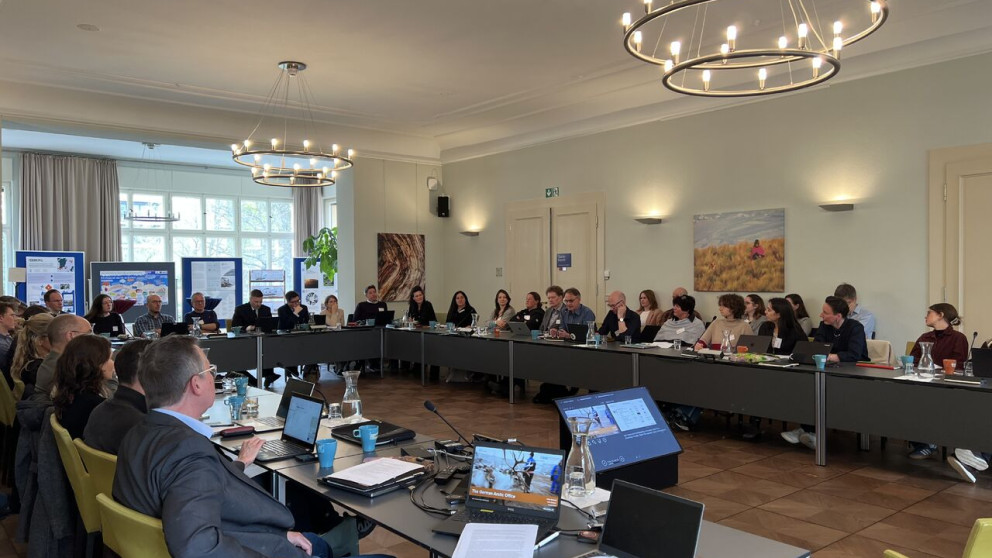
Germany is not an Arctic state. Nonetheless, German policymakers, scientists and NGOs all engage with the region. The Arctic is not only of geopolitical interest, but home to Indigenous peoples and their cultures. They live within highly sensitive ecosystems threatened by changes such as sea ice decline and a warming climate.
The Arctic Dialogue is a series of semi-annual meetings organized by the German Arctic Office at the Alfred-Wegener-Institute (AWI) and aimed at cultivating an open dialogue on Arctic matters between science and policymakers, including representatives of German Federal Ministries, research institutes, and NGOs engaged in Arctic research. This year, RIFS was invited to host the Arctic Dialogue and set the theme in cooperation with the Arctic Office. The Saami Council partnered with RIFS and was decisive in organizing the thematic sessions.
Rethinking knowledge production and funding structures to ensure social justice and respectful research relations
What does this mean? Simply put, decolonialism is finding its place at the conference table, in the panels, and in a sharing circle. Speakers and participants talked about a form of conducting research called “co-creation” or “co-production”. They shared about lessons learned, outputs and about the structures needed to support co-creative research. The goal? To build and continue relationships with the Indigenous peoples living in the Arctic and counter knowledge extraction, biodiversity loss and ongoing colonial structures through ethical collaboration built on trust and reciprocity.
Prof. Dr. Mark Lawrence (RIFS Scientific Director) and Prof. Hajo Eicken (AWI Scientific Director) opened the 27th Arctic Dialogue and introduced the themes. They indicated that co-creation can never be an add-on. It is a form of thinking and researching that is based on the United Nations Declaration on the Rights of Indigenous Peoples and which secures equal partnerships. Co-creation is working across knowledge systems to tackle global problems, for instance, the loss of biodiversity. It supports the rights of Indigenous peoples—which were previously dismissed by Western science—and focuses on relearning history.
“Nothing about us without us”
Lessons learned in co-creation
In the first session, moderated by Volker Rachold (German Arctic Office), German-Canadian researcher Lia Laureen Schulz (AWI) discussed Canada’s legal frameworks for co-creative research. She shared insights from Project SQUEEZE, where Indigenous and German partners collaborated on tundra conservation and engaged in reciprocal visits, learning from one another’s perspectives, priorities and ways of working. Community partners shared local governance structures and observations of landscape changes, while AWI researchers contributed modelling approaches and project resources. Frequent exchange between the two liaisons helped build trust, align expectations, and create opportunities for mutual learning and further collaboration.
“If there is no sustainment of knowledge and relationship, the failure is already embedded in the system.”
Per-Henning Mathisen (Sámiráđđi/Saami Council) and Dr. Ilaria Sartini (RIFS) presented their experiences with the project BIRGEJUPMI. The presentation highlighted the importance of sustained funding both in the writing proposal phase and following completion of the project to ensure a truly co-creative process and communication of outputs. Another point that was stressed was the importance of allowing for various kinds of outputs other than academic publications in order to achieve the objectives co-created in the transdisciplinary consortium. This approach fosters collaborative methods vital to community-based research, such as illustrating knowledge.
Whose priorities are shaping the research?
Per-Henning Mathisen talked about research as a relational process and brought to the discussion the issue of what it means to carry out research in the community you come from. Here, responsibility, transparency, and accountability are key. Research that is undertaken in a co-creative process leads to outputs that are relevant both for the host communities and the research partners, allowing for trust-building and enabling good relations to flourish.
Experiences and insights
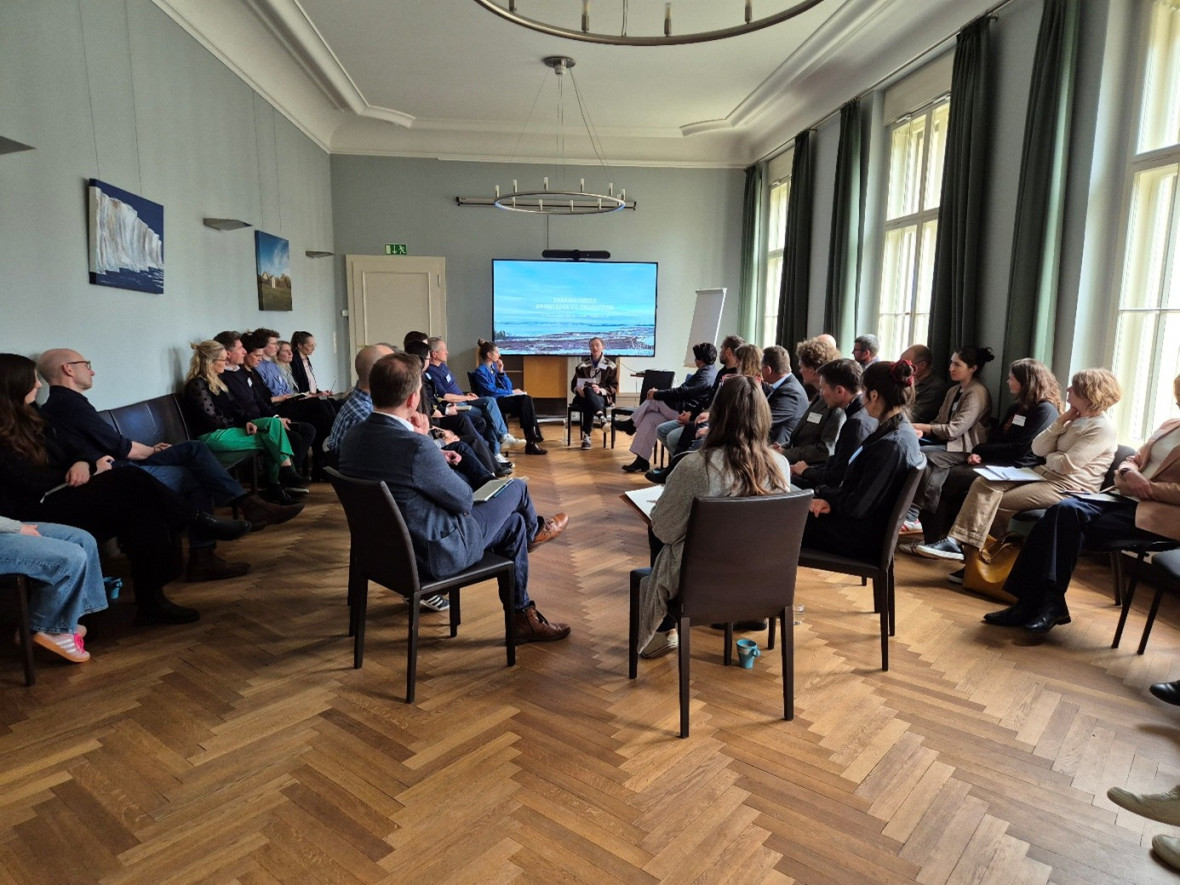
Per-Henning Mathisen continued the session with a Sharing Circle that invited participants to talk about their different experiences and approaches to knowledge co-production. Some participants spoke about the challenge of translating knowledge into practice. In one project, for example, oral histories preserved hunting regulations that could be collaboratively reinstated to protect both wildlife populations and local hunting traditions. An open mindset and a willingness to adapt made it possible to cooperate across different cultures and knowledge systems.
“One measure cannot be applied everywhere in the same manner.”
Several people noted the limited capacity of small communities, requiring additional support both for researchers and communities, and for research to be tailored to their needs. Flexibility and patience on the part of funders enabled projects to be restructured and helped distribute tasks among multiple Indigenous partners.
Structural changes needed
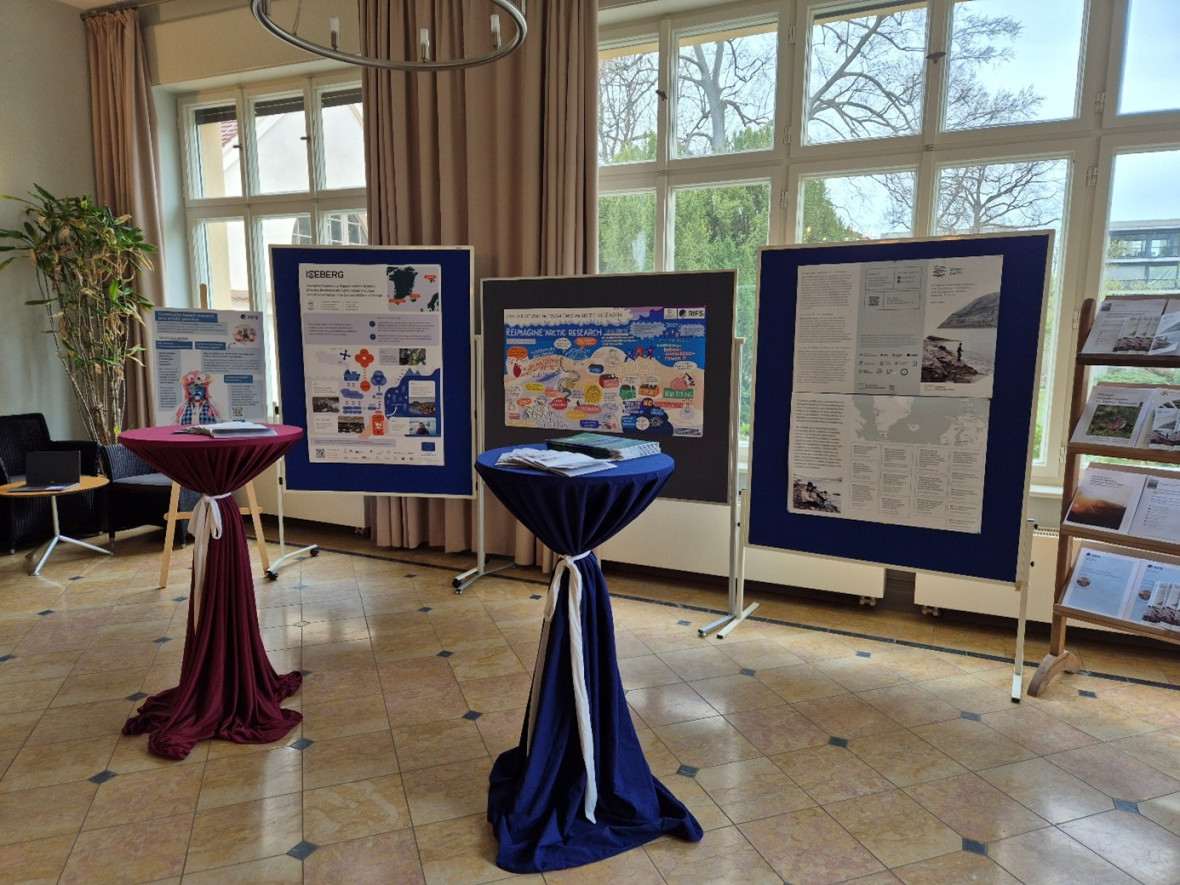
In the last session, led by Dr. Nina Döring (RIFS), Prof. Dr. Catherine Dussault (University of Ottawa), Dr. Michael Karcher (AWI), Anne Büchel and Paul Karnatz (Zukunft - Umwelt - Gestaltung [ZUG] gGmbH) contemplated structural changes and new approaches in funding to support co-creative research.
Special guest Catherine Dussault shared insights on research funding structures in Canada. Her main takeaways were that the projects allow for a lot of flexibility (timings, budgeting, collaboration), a crucial aspect for co-creative and interdisciplinary research. Grant recipients, she explained, may deviate from the proposed research/activities and budgets focus on objectives, rather than single items. In addition, researchers are encouraged to cede claims to intellectual property when working with Indigenous partners. What Professor Dussault highlighted was also that conducting research differently means supporting Indigenous research and training, placing greater importance on relevance and cultural safety, allowing the potential outputs to be used by Indigenous partners and upholding the principles of FAIR (Findable, Accessible, Interoperable, Reusable) and OCAP (Ownership, Control, Access, Possession).
The speakers pictured different ways of thinking about the uncertainty that is often part of co-creative research and the benefits this approach provides. While existing collaborations lay the foundation, relationships are built on continuity. Limited contracts, predefined outputs and timelines stand in stark contrast to this. To address challenges in the Arctic and beyond, it is essential to further develop the funding structures and continue co-creative partnerships for holistic research. Following the 27th Arctic Dialogue, AWI and RIFS are crafting a joint statement that will summarize key findings and offer recommendations for equitable, collaborative and strategic research approaches.