Climate club politics: The challenge of making a small group work on a global issue
05.05.2026

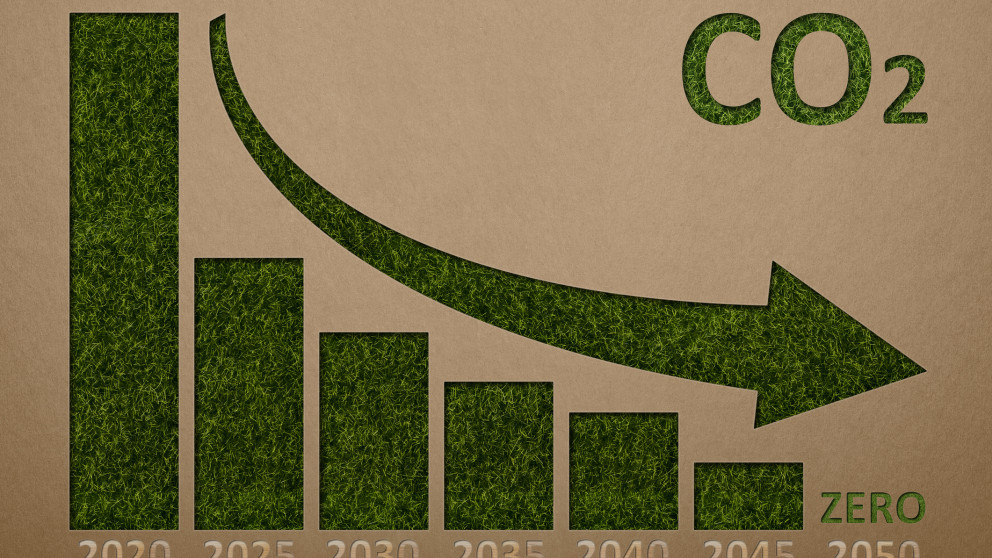
In an era of contested multilateralism, calls for smaller, club-like alliances of countries have gained increasing traction. “Climate clubs” promise to overcome the inertia that has stalled progress in global climate policy. In a recently published article in Energy Research & Social Science, I argue that there is a persistent gap between the idealized potential of climate clubs and their actual performance.
Effectiveness and efficiency: What are clubs actually good for?
Academic literature tends to portray clubs as powerful "pacesetters". In theory, clubs have more efficient decision-making processes and so can deliver more effective or ambitious outcomes than those negotiated under the United Nations Framework Convention for Climate Change (UNFCCC).
However, the large majority of studies address hypotheticals, examining clubs that could potentially be conceived — but yet do not exist. Real club-like alliances, such as the Climate Club launched by the G7 in 2022, do not live up to this image. Indeed, they struggle to deliver more effective outcomes than the UNFCCC and rarely adopt very concrete or numeric goals. Actual emissions reductions are often difficult to attribute to a specific club. Many of these alliances gain large memberships over time and end up grappling with challenges similar to those faced in negotiations under the UNFCCC.
This is not no say that clubs and climate alliances do not have their uses. However, their real strengths lie in awareness raising, capacity building, technical exchange, and supporting policy processes in niche areas. And while all this is valuable, it does not reflect the bold visions espoused in many studies.
Existing climate clubs appeal because they are voluntary and carry little risk of conflicting with domestic priorities. While these clubs and other cooperative alliances can contribute to a long-term transition to net zero, it is doubtful that they can deliver a rapid decarbonization.
Clubs struggle to be both exclusive and inclusive at the same time
Theory suggests that smaller, more homogenous groups tend to make better decisions when they include the “right” or “key” actors. In the literature, these are often politically and economically powerful regions such as the USA, China and the EU. In practice, however, the optimal club membership is determined by the individual context and conditions. Clubs tend to be quite dynamic and grow over time, enhancing their representativeness and political legitimacy. But growth can also lead to more diverse interests, slower decisions, resource dilution, and ultimately reduce efficiency. The result is a difficult balancing act for clubs, which must be exclusive enough to be ambitious and inclusive enough to be legitimate.
Consequently, existing clubs might not have membership constellations that lead to ideal (climate) outcomes. They may include members who hinder more ambitious action. Neither the original club idea of exclusivity nor a very inclusive, ”open to all” approach seems workable in practice.
Equity concerns and internal dynamics: Should small groups make rules for the whole world?
In theory, one of the main advantages of climate clubs is their potential for standard-setting — for example, on carbon measurement and accounting standards or carbon border taxes. However, a small group of powerful actors setting rules and standards that could possibly affect the entire world raises serious justice concerns. In practice, industry-focused climate clubs are typically dominated by G7 countries. If such a club were to establish a standard for "clean steel" that then becomes a de facto global norm, countries in the Global South that had no voice in shaping it could be placed at a disadvantage.
Clubs are also free to design their own internal governance structures. As voluntary arrangements, clubs define their own (new) rules, dynamics, and power relations. As experimental and informal actors, clubs could be either perpetuators of existing inequalities between the Global South and North or become vehicles for change. Their internal procedures and rules require careful consideration and refinement in order to properly address equity and sustainability concerns. Ultimately, more knowledge is needed about countries’ priorities within clubs and which, or whose, interests are reflected (most) in decision-making.
In sum, climate clubs are not a panacea for climate change; the term itself can generate unrealistic expectations. In short, the real challenge lies in a fundamental dilemma for climate policy: the need to pursue rapid and ambitious decarbonization goals with the principles of justice, inclusion, and sustainable transformation. Future research should better integrate theoretical models with qualitative club case studies, examine internal power dynamics, and more seriously address global equity concerns.