The way out is in: Reflections from the Nordic Lighthouse
29.04.2026
A country without a military, a global leader in gender equality, and rivers so clean that you can drink straight from them – does this sound like something from a dream? In Iceland, it’s simply reality.
Following an invitation to contribute to the Nordic Lighthouse, a metaphor chosen by the Spirit of Humanity Forum (SoH Forum), I took part in an experimental gathering in Reykjavík aimed at helping leaders and activists to reconnect with their inner compass in order to navigate the complexity of transformation work.
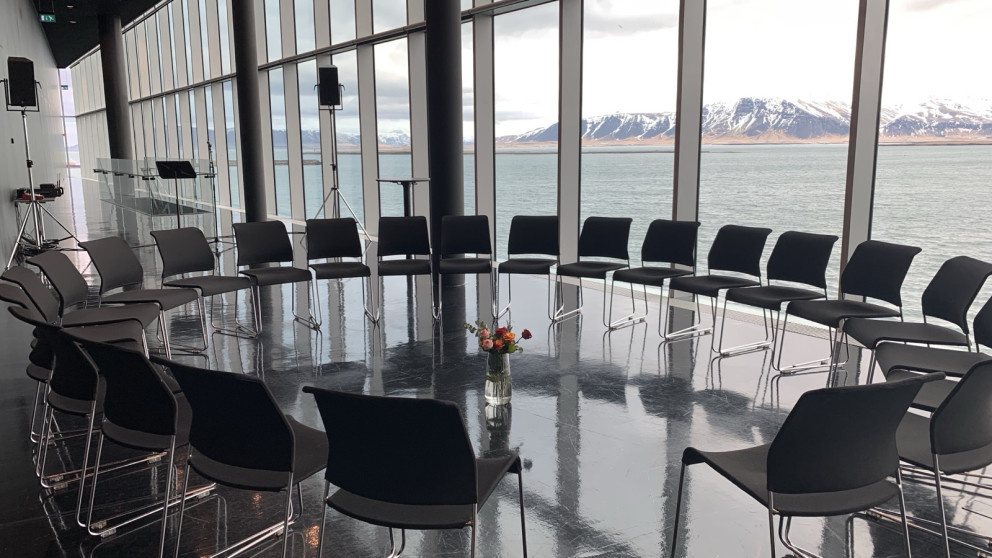
The SoH Forum is a global network based in Reykjavík that is committed to catalysing systemic change in governance by promoting love and compassion in decision-making. Taking place in April 2026 at the Harpa Concert Hall, the Nordic Lighthouse brought together leaders and intergenerational changemakers around the simple but radical conviction that the world's most urgent crises are not only structural, they are deeply human. The guiding philosophy: the way out is in and through.
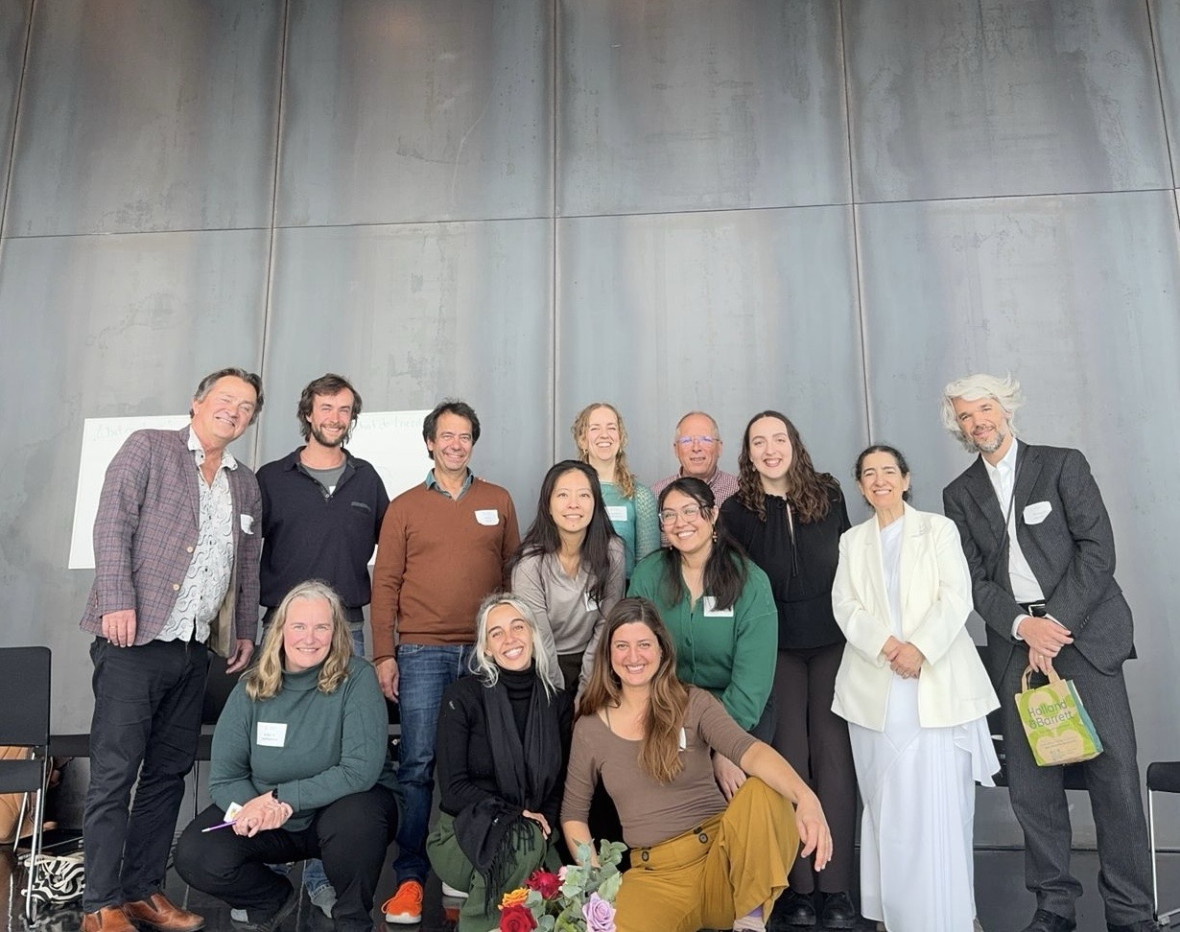
On the first day, we explored concepts, frameworks and practices for reconnecting with our embeddedness and intuition. What made this Forum distinctive was the introduction on Day Two of six "Living Laboratories" — Governance and Leadership, Health and Well-being, Education, Environment and Climate and Food Systems, Economy and Work, and Creative Arts. These were participatory spaces in which the 150 participants were invited to choose their field of interest, connect, name difficulties within their work and envision a regenerative future. We traced a path back to the present, asking which seeds of renewal are already alive and how they might be nurtured.
As a practitioner and academic from the Research Institute for Sustainability, I co-facilitated the Environment, Climate and Food Systems hub alongside Brazilian artist and activist Isadora Canela and French author and lead of the Conscious Food Systems Alliance, Thomas Legrand. A central insight emerged: Many of those working hardest to protect nature have, somewhere along the way, stopped spending enough time in it, trading forests and coastlines for screens and conference rooms until what they are aiming to protect becomes abstract and distant. The conclusion was simple but striking: Before we can protect nature, we need to reconnect with it to sustain the strength our work demands. Sessions unfolded through contemplative practice, dialogue circles, and storytelling, methods that prioritise human connection over conventional conference outputs.
Running alongside the Nordic Lighthouse, the Wellbeing Economy Forum brought together policymakers, researchers, and global leaders to ask: What does it truly mean for a society to succeed? Sessions ranged from moving beyond GDP to the care economy, Indigenous health and wellbeing in the Arctic, and governing for future generations, with input from representatives of the OECD, the Club of Rome – and two heads of state: Iceland’s Halla Tómasdóttir, the Forum’s patron, hosted a state visit by her Slovenian counterpart, Nataša Pirc Musar. Joining the Forum, the two leaders participated in a discussion titled “The Courage to Care,” a signal that wellbeing is firmly on the agenda at the highest political levels.
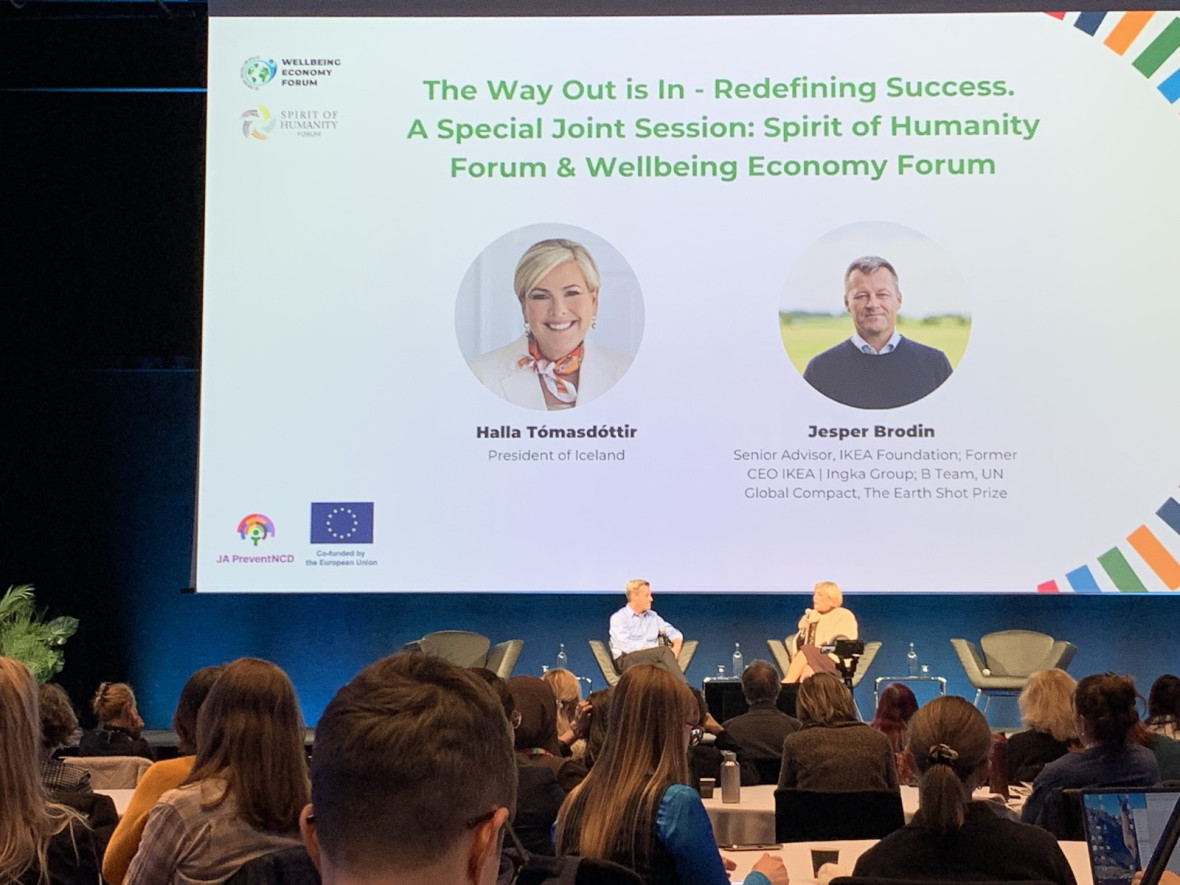
The two forums enriched each other in a compelling way. Where the Wellbeing Economy Forum examined the structures and policies needed to build healthier societies, the Nordic Lighthouse explored the inner dimension that makes such change possible: the values, courage, and consciousness of those driving it. One highlight that bridged both events was a candid conversation on "Redefining Success" between Iceland's President Halla Tómasdóttir and former IKEA CEO Jesper Brodin. In the spheres of politics and business, there is rarely open discussion of the fact that change requires not only structural adjustments but also inner transformation – a shift in mindsets, values, and consciousness. This topic is often met with silence, deemed too personal, too soft, or insufficiently “objective.” The two leaders broke this silence by speaking openly and honestly about it – with a combination of humour and depth that often makes such conversations possible.
Ranked the world's most peaceful nation for 18 consecutive years, Iceland has long been a living proof of concept, a society built on trust, equity, and dialogue. One must of course be mindful of direct comparisons: Iceland faces its own challenges, including limited winter daylight, dependency on imported goods, and full reliance on international alliances for its national defence, a reminder of the relational embeddedness we all share. Yet the absence of a standing army, the pristine landscape, and the drinkable rivers remain quietly radical guiding principles, embodied rather than merely declared. 2026 also marks the 40th anniversary of the Reagan–Gorbachev Summit at Höfði House, a dialogue that helped end the Cold War and established Iceland’s reputation as a place where honest conversation can open unexpected doors.
I wish to extend a heartfelt thank you to the organisers, process designers, volunteers and everyone involved in making this experiment become reality. The Nordic Lighthouse aspires to be not just a conversation about transformation, but a living demonstration of it.