Climate Change as a Symptom of Collective Trauma: Why Sustainability Requires Healing, More Than Just New Policies
19.12.2025

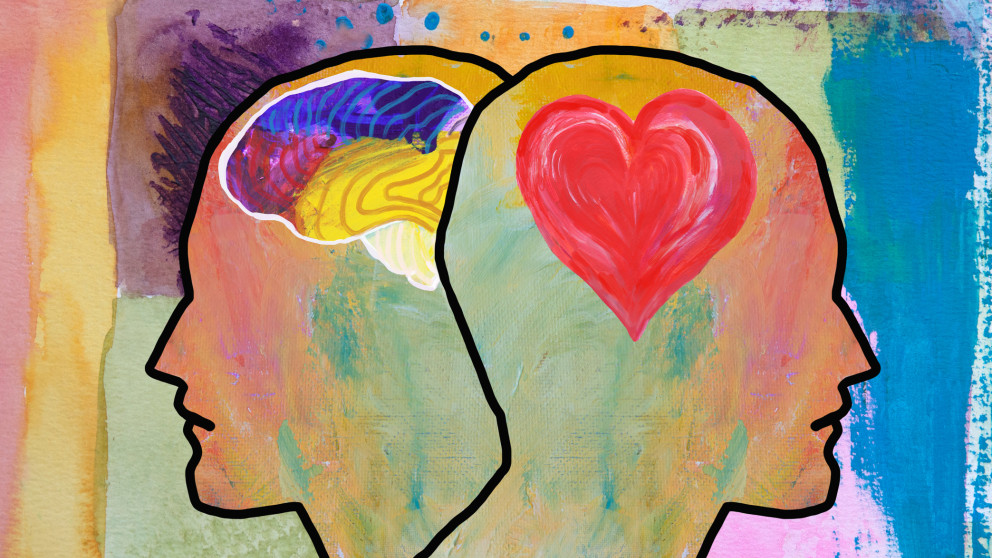
We often discuss climate change as a technical or economic challenge, framed in the language of carbon budgets, technological innovation, regulatory tools, and market efficiencies. These approaches are indeed important, yet they do not explain why societies continue to reproduce harmful, extractive behaviors even when we fully understand their long-term consequences.
Public discourse frequently highlights the trauma and anxiety generated by climate change, but far less attention is given to the trauma that helped create the conditions for climate change in the first place. Research across psychology, sociology, and systems science demonstrates that when collective wounds remain unacknowledged, societies tend to recreate familiar patterns like extraction, domination, and disconnection from both people and nature. Behind the graphs and policy models lies a deeper story that environmental data alone can’t capture: climate change is a symptom of unresolved trauma with the ecological crisis as an outcome.
Recognizing this shifts the focus of climate action. Addressing emissions and deploying new technologies is necessary, but insufficient. Sustainable transformation must also engage with the socio-psychological foundations and historical narratives that made planetary harm possible. This perspective reveals climate change not simply as a failure of policy or markets, but as evidence of deeper fractures in our social fabric that require healing, more than technical solutions.
Extractive systems as trauma responses
In psychology, one of the outcomes of trauma is a profound fragmentation of connection to oneself, to others, and to the surrounding environment. When these patterns emerge at a societal scale, they become embedded in institutions and norms. They can manifest as:
- disconnection from nature, enabling its commodification;
- short-termism, driven by anxiety, insecurity, and perceived scarcity;
- polarization and reactive public discourse.
From this perspective, what we commonly label as “unsustainable behavior” can be understood instead as a systemic trauma pattern that is automatic, defensive, and resistant to change.
This pattern becomes even more evident when we consider the role of leadership. As Gabor Maté argues in his book “The Myth of Normal”, modern societies frequently elevate individuals who carry significant unresolved trauma into positions of political and corporate power. Leaders shaped by disconnection naturally recreate disconnection. When it remains unexamined, “trauma creates more trauma”. Leaders who are alienated from their own emotions often normalize systems built on domination rather than reciprocity, efficiency rather than empathy, and control rather than care. For example, in her book “Too Much and Never Enough: How My Family Created the World's Most Dangerous Man”, psychologist Mary Trump, Donald Trump’s niece, explains what it was like for Donald Trump to grow up with a sociopathic father and to have a lot of money and material possessions, but never his father’s love and attention.
In this sense, trauma becomes a structural force, not only an individual experience. When traumatized leaders shape institutions, they inadvertently perpetuate systems that mirror their internal landscapes: defensive, extractive, competitive, and emotionally detached. The very logics of modern governance and corporate culture for urgency, growth-at-all-costs, adversarial politics reflect the psychic patterns of unhealed trauma.
Over generations, trauma-driven leadership has reinforced worldviews that treat the Earth and human communities as objects to be managed rather than relationships to be cared for. Thus, unsustainable systems are expressions of unhealed collective trauma embedded in the stories we inherit, the leaders we choose, and the structures we continue to reproduce, not rational economic outcomes.
Why healing matters for climate action
When trauma remains unacknowledged, sustainability efforts will meet resistance. People may feel threatened, unheard, or blamed, and systems under stress tend to revert to familiar defensive patterns of denial, short-termism, and social fragmentation. Conversely, when societies engage in healing processes, such as meaning-making, acknowledging historical wounds, and rebuilding trust, new forms of cooperation become possible. Research on trauma-informed systems demonstrates that such practices can increase willingness to collaborate, resilience in the face of uncertainty, and creativity in problem-solving. Healing is therefore an essential dimension of climate action, not just a “soft” complement.
If climate change is rooted in trauma, then sustainability transitions will falter unless they also address the emotional, historical, and relational forces shaping human behavior. Policy design and technology alone cannot transform a system whose underlying narratives remain unchanged. A society that has healed enough to reconnect with itself and with the natural world becomes fundamentally more capable of stewarding planetary wellbeing.
Reimagining sustainability as a healing journey
Viewing climate change as a symptom of trauma shifts the guiding question from “How do we fix this?” to “How do we heal enough to stop recreating the conditions that caused the crisis?” This change in perspective recognizes that ecological breakdown cannot be separated from the social, emotional, and historical wounds that shape human behavior. Sustainability, in this sense, becomes inseparable from healing.
Addressing emissions remains important. But without addressing the relational wounds and inherited narratives that make destructive systems feel normal, we risk treating symptoms while leaving root causes untouched.
For healing to become actionable, we need practical tools that can help us understand where our reactions come from and how our environments shape our behaviors. This is where environmental psychology tools such as The Invisible Backpack, The Center of My Environment, and the Action–Reaction Model become essential in the process of healing.
- The Invisible Backpack helps us recognize the formative experiences, like traumas, cultural messages, relational patterns, we unconsciously carry into adulthood. By making these patterns visible, we can interrupt cycles of reactivity and engage more constructively and meaningfully in dialogue.
- The Center of My Environment places the individual at the center. Each of us are the center of our own environment, which means we are elements in each other’s environments, so any influence is mutual. This also means that we may not be able to control what happens in our environment, but we can choose how we understand what happens and what we do as a result through the Action–Reaction Model. What others in our environment say or do (the action) will trigger our reaction and vice-versa. Both the action and reaction are influenced by what each of us carries in their Invisible Backpack. We don’t know what others carry, but we can choose to ask more questions and make less judgments. We can also choose to look in our own Invisible Backpack to understand how we can become less reactive, more compassionate and lead by example.
Together, these tools can translate the abstract idea of “healing” into concrete practices that improve dialogue, leadership, and collective capacity for transformation across disciplines.