Systemic Risk Governance for Disaster Risk Management and Climate Change Adaptation
31.12.2025
Climate change adaptation is a top priority worldwide and is closely linked to the ongoing development of risk management approaches. For the open-access book Adapting to Climate Change. Implications of Risk-Based Approaches, researchers from the Research Institute for Sustainability (RIFS) contributed a chapter on innovations in climate change adaptation and disaster risk management. Drawing on recent findings from a European research project, the chapter illustrates how innovations can enhance resilience, bridge local and systemic perspectives, and support continuous learning in risk governance.
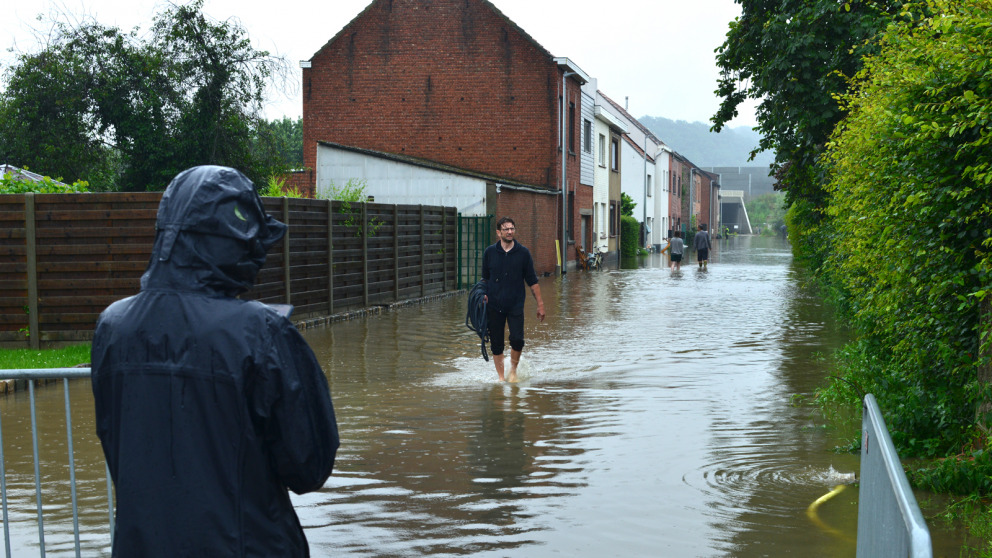
Systemic risks are characterised by complex interdependencies and cascading, interconnected effects across ecological, social, and economic domains. Systemic risks from natural hazards, including extreme hydrological events such as floods and droughts, are further exacerbated by climate change. In their article "Systemic Risk Governance for Disaster Risk Management and Climate Change Adaptation", RIFS researchers Pia-Johanna Schweizer, Benjamin Hofbauer and Paul Einhäupl consider how the governance of systemic risks should evolve to meet these challenges.
The researchers explain how systemic risks are driven by feedback loops, interdependencies and tipping points and argue that their governance should be grounded in reflection, iteration, and deliberation. These principles were analysed in the Horizon Europe research project "Disaster Resilience for Extreme Climate Events" (DIRECTED) and successfully tested in the field.
Reflection is crucial due to the unpredictable nature of systemic risks, which often involve tipping points and cascading effects that are difficult to anticipate. Iteration processes, in turn, provide opportunities for fine-tuning strategies for disaster risk management. Deliberative governance is essential for systemic risk management to ensure that diverse perspectives, local knowledge and the voices of vulnerable populations inform disaster risk management strategies.
These three principles inform the Risk-Tandem Framework framework developed by researchers in the DIRECTED project. Supported by real-world laboratories in several European regions, the project applies Risk-Tandem Framework in a collaborative, participatory approach that brings together local stakeholders, practitioners and researchers to develop socially acceptable and solution-oriented strategies. This ensures that the social implications of risk governance decisions are not neglected and local circumstances and values are taken into account.
Alongside this governance framework, the project is also developing a software solution (Data Fabric) that provides a data infrastructure to enable stakeholders to consolidate and connect relevant data sources, models, and information products across disaster risk management and climate change adaptation application domains. Together, the Risk-Tandem Framework and Data Fabric enable adaptive, evidence-based and participatory governance that is able to address systemic risks, especially those related to climate change and disaster resilience.
Contact

PD Dr. Pia-Johanna Schweizer