COP31 in Antalya: An Assessment
25.11.2026
A statement by researchers
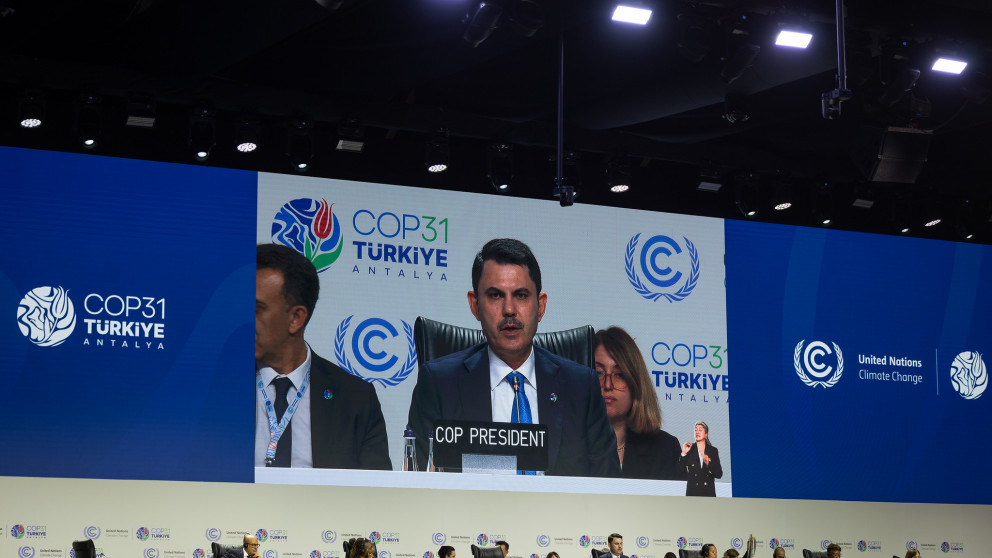
The last draft of the cover decision presented by the COP31 Presidency was sharply criticized and rejected by several countries, including the EU member states.
The failure to reach a final declaration that combined consensus with ambition is a serious setback for multilateralism and climate action. With populist and nationalist forces on the rise, cooperation between states will remain indispensable. Nevertheless, we consider the rejection of the text by the EU, the Small Island Developing States (SIDS) and other countries to be a logical reaction.
The final draft of the cover decision contained no concrete language on fossil fuels, apart from a weak, indirect reference to the outcome of COP28 in Dubai, which called for a 'transition away from fossil fuels'.
The draft also placed unrealistic expectations on technologies such as carbon capture and storage (CCS) and carbon capture and utilization (CCU), without adequately accounting for their limits and risks. One example is enhanced oil recovery (EOR), in which captured CO₂ is injected into mature oil fields to extract additional oil. The text would thus have provided a pretext for using fossil fuels for longer than is compatible with climate targets.
Nor did the draft contain the binding commitments on clean power generation needed to make the COP's central goal – raising the share of electricity in global final energy consumption to 35% by 2035 – effective for climate protection.
Instead of negotiating phase-out timelines and the future energy mix, the text normalized the concept of 'overshoot' to an alarming degree. Overshoot means temporarily exceeding the agreed limit of 1.5 °C above pre-industrial levels in the hope of bringing temperatures back down later. The least developed countries, small island states and African countries are right to warn that this risks losing sight of the Paris goals and crossing tipping points beyond which a return to the world as we know it would be impossible.
At the same time, reliable funding for adaptation and for loss and damage is still lacking. Many industrialized countries, Germany among them, are falling far short of providing the funds needed to ease the burden on the hardest-hit countries of the Global South and to enable their planned mitigation measures. This not only deepens existing global inequality but also increases the risk of economic instability and humanitarian disasters.
While the text acknowledged the important role of the Intergovernmental Panel on Climate Change (IPCC), it mentioned the IPCC separately from 'the best available science', thereby diminishing its standing. More importantly, interventions, mainly from Saudi Arabia, China and India, meant that the text contained no clear statement on the timetable and secure funding for the IPCC's work in the coming years. It is therefore unclear whether the scientific input for the second global stocktake under the Paris Agreement will be available in time.
The failure of UN member states to agree on a final declaration could mark a turning point: at four of the past five conferences, the outcomes often appeared to bow to the interests of the fossil fuel industry.
Our attention and support now turn to COP32 in Addis Ababa and to the second conference on the transition away from fossil fuels (TAFF), which Tuvalu and Ireland will host in summer 2027.
The world is undergoing profound upheaval. This is precisely why international processes must become more resilient to political setbacks. Not every future negotiation will succeed. What matters is avoiding a standstill, because time is running out.
COP31 should prompt a rethink of how future climate conferences are organized. A 'coalition of the willing', such as the one that meets at the TAFF conference, could lead the way with concrete, verifiable commitments and binding mechanisms, without abandoning multilateral cooperation. Alongside ambitious emission reduction targets, however, such a coalition must also provide adequate funding for mitigation and adaptation and for addressing loss and damage in poorer countries. In addition, the Global South needs concrete financing and implementation measures that do not add to its debt burden. Climate justice also entails taking responsibility for the transformation.
Ideally, the move away from fossil fuels should not only be negotiated politically but also become economically inevitable. This is achievable: in the long term, climate-friendly alternatives can be cheaper and less prone to price swings, creating economic incentives that work regardless of political majorities. At the same time, overloading the Earth system must be prevented, which includes a rapid shift to clean energy.
After the outcome in Antalya, the international community has a chance to show how resilient it is. Despite the setbacks, it can still act effectively, and it can pursue the goals of the Paris Agreement with ambition. A clean, healthy and safe future, with prosperity shared fairly, remains possible.
As members of the research community, we stand ready to continue supporting this process.
Authors (researchers who attended COP31):
Bengisu Berispek (PhD candidate, TU Berlin)
Dr. Germán Bersalli (Research Institute for Sustainability at the GFZ)
Dr. Friedrich J. Bohn (Earth Resilience Institute ERI, Helmholtz Centre for Environmental Research – UFZ)
Johanna Erle (PhD candidate, Universität Hamburg)
Prof. Dr. Doris Fuchs (Research Institute for Sustainability at the GFZ; University of Münster; Member of the Board, German Climate Consortium (DKK))
Dr. Anna Maria Irrgang (Alfred Wegener Institute, Helmholtz Centre for Polar and Marine Research)
Dr. Max Jungmann (Heidelberg Center for the Environment (HCE), Heidelberg University)
Sissi Knispel de Acosta (Earth Resilience Institute ERI)
Prof. Dr. Harald Kunstmann (University of Augsburg)
Prof. Dr. Mark Lawrence (Research Institute for Sustainability at the GFZ; University of Potsdam)
Maike Nicolai (GEOMAR Helmholtz Centre for Ocean Research Kiel)
Prof. Dr. Dr. h.c. Hans-Otto Pörtner (Alfred Wegener Institute, Helmholtz Centre for Polar and Marine Research)
Prof. Dr. Reimund Schwarze (Helmholtz Centre for Environmental Research – UFZ)
Dr. Jens Strauss (Alfred Wegener Institute, Helmholtz Centre for Polar and Marine Research)
Dr. Toste Tanhua (GEOMAR Helmholtz Centre for Ocean Research Kiel)
Prof. Dr. med. Claudia Traidl-Hoffmann (University of Augsburg)
Belinda Uebler (PhD candidate, Heidelberg University)
Dr. Jan Wilkens (German Institute for Global and Area Studies, GIGA)
Dr. Judith Ziegler (GEOMAR Helmholtz Centre for Ocean Research Kiel)
Other researchers who support this statement:
Prof. Franz Baumann, PhD (Georgetown University)
Prof. Dr. Claus-Heinrich Daub
Assoc. Prof. Dr. Kirsten von Elverfeldt (HeiGIT, Heidelberg Institute for Geoinformation Technology)
Dr. Christoph Gerhards
Dr. Gregor Hagedorn
Dr. Judith Nora Hardt (Centre Marc Bloch, Berlin)
Dipl. Geol. Gabriele Harrer-Puchner (Technical University of Munich & System Logics T.T., St. Gallen)
Prof. Dr. Tina Heger (Technical University of Munich & Leuphana University Lüneburg)
Prof. Dr. Thomas Hickler (Senckenberg Biodiversity and Climate Research Centre)
Prof. Dr. Anke Hildebrandt (Friedrich Schiller University Jena)
Prof. Dr. Jörg Kopecz (FOM University of Applied Sciences, Bonn)
Prof. Dr. Reinhold Leinfelder (Freie Universität Berlin)
Prof. Dr. Miguel D. Mahecha (Leipzig University)
Dr. Klaus Müschen
Prof. Dr. Pao-Yu Oei (Europa-Universität Flensburg)
Prof. Dr. Andreas Oschlies (GEOMAR Helmholtz Centre for Ocean Research Kiel)
Prof. Dr. Dr. Martina Schäfer (TU Berlin)
Prof. Dr. Jürgen Scheffran (Universität Hamburg)
Dr. Volker Stelzer (Karlsruhe Institute of Technology)
Dr. med. Katharina Truschinski (University Medical Center Mainz)
Prof. Dr. Kai U. Totsche (Friedrich Schiller University Jena)
Prof. Dr. Kamil Ustaszewski (Friedrich Schiller University Jena)
Prof. Dr. Antje Wiener (Universität Hamburg)
Prof. Dr. Christoph Heubeck (Friedrich Schiller University Jena)
Prof. Dr. Hannes Feilhauer (Leipzig University)
Prof. Dr. Ana Bastos (Leipzig University)
Prof. Dr. Hermann Ott (Eberswalde University for Sustainable Development)
Prof. Dr. Doris Vollmer (Max Planck Institute for Polymer Research, Mainz)
Prof. Dr. Roland Zech (Friedrich Schiller University Jena)