The Post-2030 Agenda: The Future of Global Sustainability Goals
07.09.2026
You may recall the discussions from a few decades ago, when many questioned whether it was premature to discuss climate adaptation. At that time, the impacts of climate change were just beginning to manifest globally. A lively debate ensued: should urgently needed adaptation measures be implemented immediately, or would such discussions and developments be co-opted by influential industry players to stall a transition away from fossil fuels? Today, the need to discuss climate adaptation is widely recognized and accepted. Similar debates have unfolded in recent years regarding Carbon Capture and Storage (CCS) and Carbon Dioxide Removal (CDR). In the wake of this shift, a new question has emerged: how can the momentum necessary to achieve diverse climate targets – ranging from temperature limits to CO2 or greenhouse gas neutrality – be sustained in the face of the imminent risk of breaching the Paris Agreement’s 1.5C threshold? The German Climate Consortium has addressed this challenge in a detailed assessment.
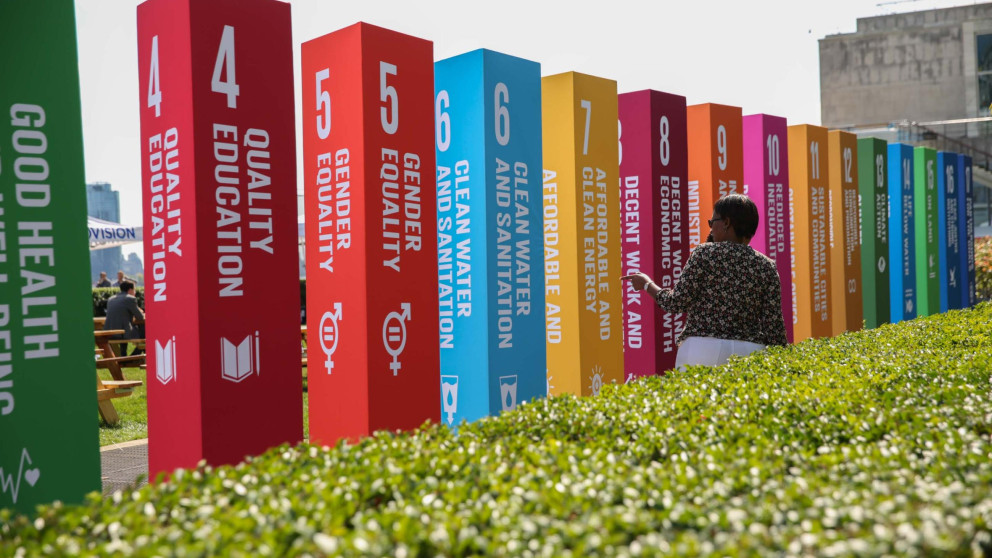
A similar discussion has unfolded in recent years regarding the international sustainability agenda. With its 17 Sustainable Development Goals (SDGs), the United Nations’ 2030 Agenda, adopted in 2015, serves as the global roadmap for sustainable development. As 2030 approaches, the question naturally arises: “Will there be a sustainability agenda beyond 2030?” What challenges lie in meaningfully preparing such a process under current circumstances – particularly as it becomes increasingly evident that many goals will remain unmet by 2030 – and how can a post-2030 agenda be negotiated in a participatory and equitable manner among the UN Member States? This will undoubtedly require a close global partnership, one that accounts more deeply for inequalities, ensures that burdens are shared fairly, and takes a nuanced approach that addresses the legacy of historical greenhouse gas emissions.
Until recently, international discussions regarding a post-2030 agenda tended toward caution, partly to avoid jeopardizing efforts to achieve the 2030 targets. Given the significant time required to develop a scientifically informed policy agenda, this restraint has often concerned me. Unlike the years preceding 2015, the current geopolitical landscape is defined by powerful actors, narratives, and actions that actively undermine sustainable development. Consequently, various aspects of a future sustainability agenda are being discussed cautiously on the international stage, such as at this year’s UN High-Level Political Forum (HLPF) on Sustainable Development in New York. My RIFS co-director and DKK board member, Doris Fuchs, along with other colleagues, participated in these discussions as part of the German delegation. For those interested, a detailed report on the HLPF 2026 is available here. In this editorial, I wish to present three key arguments to the DKK community as to why, despite these geopolitical challenges, it is vital to continue providing scientific support for the development of a new post-2030 agenda.
First, the 2030 Agenda is rooted in the UN Universal Declaration of Human Rights. These rights are universally valid and will remain so beyond 2030. At the HLPF, it was emphasized that this connection has been further strengthened by the 2024 “Pact for the Future.” This pact highlights human rights as a cross-cutting principle for all policy areas and a prerequisite for sustainable development. Unlike the preceding Millennium Development Goals (MDGs), the 2030 Agenda is not viewed as an isolated development programme, but rather as part of a broader, human rights-based framework that is grounded in the UN Charter. Consequently, while the SDGs are geared toward the year 2030, they remain valid beyond that date. The challenge, however, lies in communicating this without creating the false impression that efforts to achieve the 2030 goals can be scaled back. This is why it is prudent to view the SDGs through the lens of “until and beyond 2030.”
Second, the SDGs do not address all aspects of sustainability currently recognized as critical. Even if we were to fully achieve every SDG by 2030, we would not have reached our ultimate goal, nor would our societies be truly “sustainable.” Admittedly, achieving the SDGs would lead to a far more equitable, healthy, and liveable world for the vast majority of the global population. However, sustainability encompasses a much broader spectrum than the SDGs alone can cover. From this perspective, it is all the more important to engage with a post-2030 agenda to integrate existing goals and incorporate new dimensions of sustainability, while simultaneously working intensively to achieve the current 2030 targets.
Third, sustainability is not only broader in scope than the SDGs; it is also dynamic rather than static. Given the accelerating pace of technological development and environmental change (in particular climate change), what is required for sustainability today will likely differ from what is needed in the coming decades. A prime example is the role of Artificial Intelligence (AI), which is already, and will increasingly be, central to sustainability-related endeavours. It is difficult to imagine a serious post-2030 agenda that does not account for the opportunities and risks of AI, alongside other digital and biotechnological advancements such as quantum computing, subcutaneous chip implants, and genetic interventions. A sustainability agenda envisioned today for a fifteen-year horizon will thus be notably different from the one drafted in 2015.
As climate research has demonstrated, gaining scientific insight into future developments is a process that requires significant time. Consequently, proactive preparation is imperative, spanning both the advancement of research and the complex arenas of international dialogue and negotiation. At the same time, international policymakers, supported by the scientific community, must make every effort to achieve the SDGs and their respective targets by 2030. Against the backdrop of geopolitical challenges, the goal should be to incorporate these achievements, in an adapted form, into a new agenda. This will allow us to take a further step toward fairer, more humane living conditions for the global population and the long-term well-being of the Earth’s ecosystems.
This post was originally published on 3.August 2026 as an editorial (in German only) on the website of the German Climate Consortium, DKK.