When nature reclaims: Lessons on regeneration from a photographic exhibition
24.04.2026

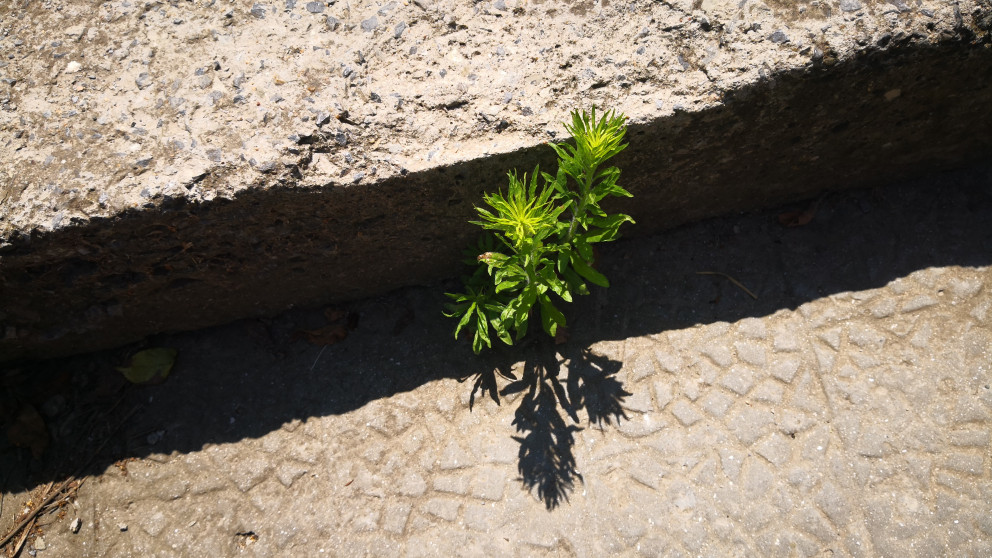
What happens when human systems step back long enough for nature to respond? This question guided the photographic exhibition “Nature Reclaims: Images of Healing,” which recently concluded in Berlin at C-Space on March 8, 2026. The exhibition documented places where nature slowly returned after human-built environments had been neglected or abandoned: plants growing through cracks in pavement, moss covering scarred walls, roots reshaping brick and stone. At first glance, these scenes might appear as signs of decay. But the longer one looks, the clearer another story becomes: regeneration is not an exception in nature. It is the default, when conditions allow it.
Learning from nature’s intelligence
Across the photographs, nature shows that life does not wait for ideal conditions. Seeds settle into tiny openings, roots follow fractures in concrete, vines climb forgotten walls. Nature works with what exists.
The exhibition explored this idea visually, but also conceptually. Each image was accompanied by short reflections connecting ecological regeneration with the systems we build in our economies, institutions, organizations, and personal lives. Many of the patterns visible in the built environment mirror the patterns shaping modern societies. Systems designed around constant growth, productivity, and extraction often leave little space for rest, reflection, or renewal. Yet the photographs show that when allowed, life reorganizes itself. The question is whether human systems can do the same.
Regeneration and the redefinition of business
The exhibition was part of a broader research practice developed during my fellowship at the RIFS. That work explores the possibility of redefining business as: an entity that solves social issues and creates social value in a financially sustainable way.
This definition shifts the purpose of organizations. Instead of measuring success primarily through growth or profit, the question becomes whether an organization contributes to solving problems or creating conditions that support life. The photographs in the exhibition offered a metaphor for this shift. In landscapes where extraction once dominated, nature slowly reorganizes the system when human intervention disappears. Similarly, economic systems could be redesigned so that they support regeneration rather than consume it. Nature already shows that transformation is possible. The challenge is whether we are willing to learn from it and allow for the space and time needed for regeneration.
The Invisible Backpack
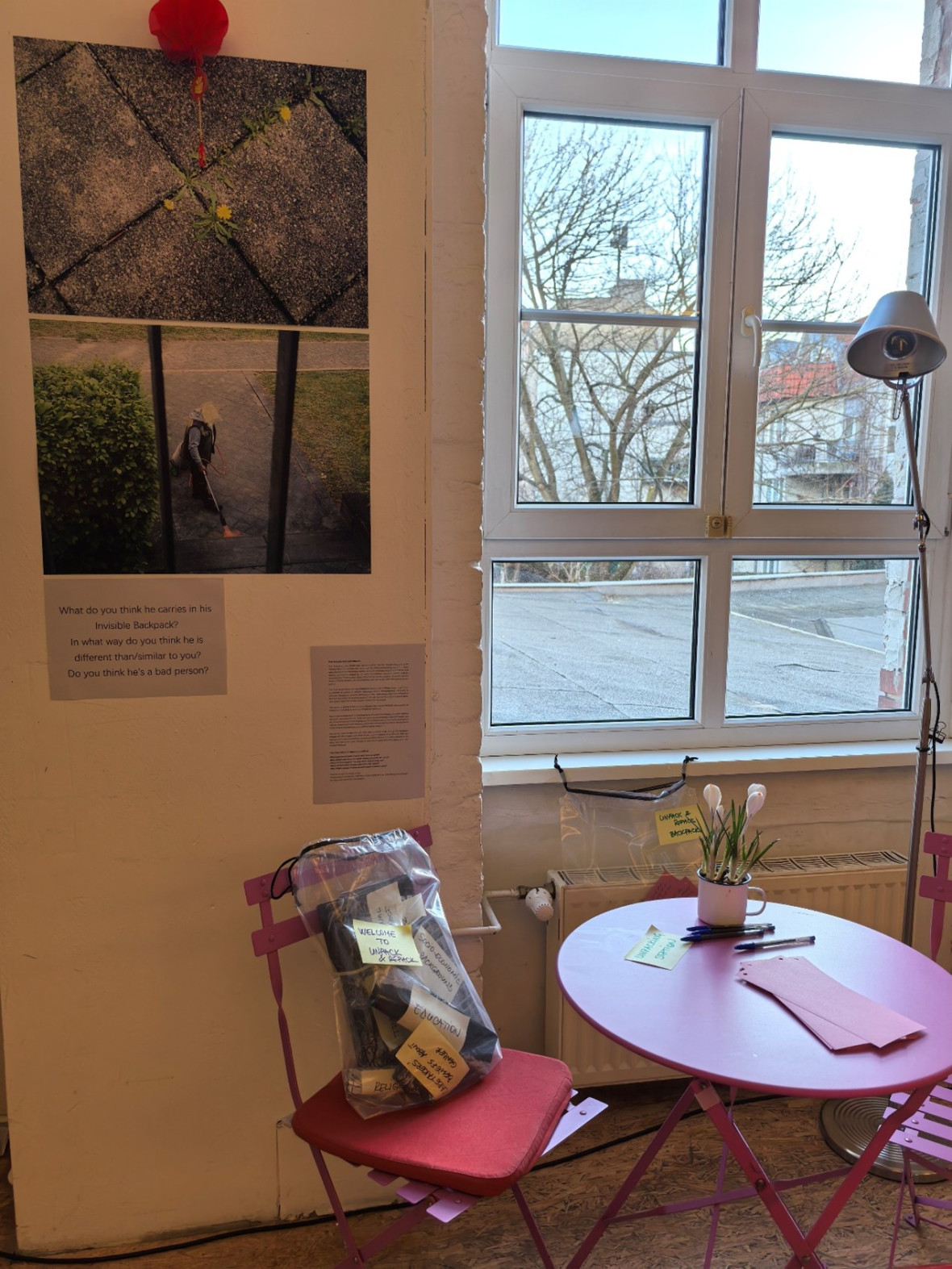
One element of the exhibition resonated particularly strongly with visitors: the Invisible Backpack station placed within the exhibition.
The installation invited visitors to reflect on the past experiences and assumptions they carry with them, their beliefs about success, work, money, worth, and possibility shaped by family, education, culture, and personal history. Inside a transparent backpack were small boxes symbolizing different experiences people might carry: encouragement or discouragement, belonging or exclusion, freedom or pressure, confidence or fear. Visitors were invited to walk through the exhibition first, and only afterward return to the station to reflect on the contents of their own Invisible Backpack.
Many described this as the most immersive and enriching part of the experience. The exhibition did not simply present images to observe. It also invited people to notice how their own beliefs and experiences influence the systems they participate in. If our Invisible Backpacks shape how we define success, risk, or possibility, then they also shape the organizations we build and the futures we imagine.
Slowing down enough to notice
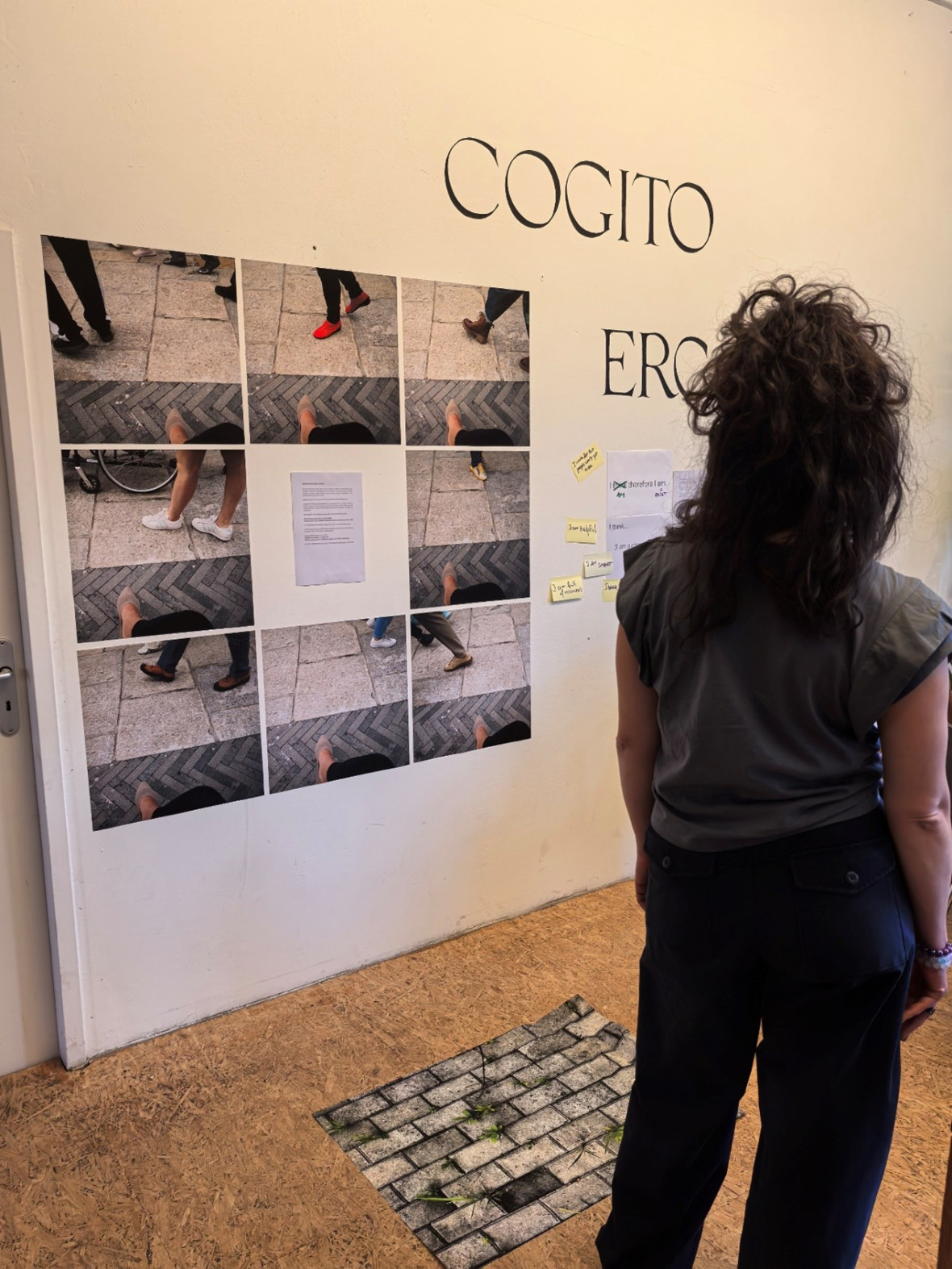
Another recurring theme in the exhibition was pace. Grass growing through pavement appeared only because no one had walked there for a long time. Moss covering a wall was possible because the wall had been left alone. Regeneration, in other words, often begins with enough space and time.
Yet modern societies are structured around acceleration, constant activity, urgency, and productivity as proof of worth. In such environments, slowing down can feel like failure. However, nature suggests a different rhythm. Sometimes the most transformative step is not doing more, but stepping back long enough to notice what is already happening.
An invitation to unpack
Although the exhibition has now closed, its central question remains open:
If regeneration is possible in landscapes shaped by extraction, what might become possible in our institutions, economies, and personal lives?
Perhaps the first step is simply becoming aware of what we carry in our own Invisible Backpacks:
- What experiences have shaped how you see the world?
- What beliefs about success, work, money, or worth do you carry?
- Which of those beliefs support you and which might be limiting you?
There are no right or wrong answers. But making the invisible visible can change what once seemed impossible. Because if we think with what we carry, then changing what we carry may also change what we become and the systems we build together.