Restoring the American Dream? Trump scraps cornerstone of US climate policy
17.02.2026

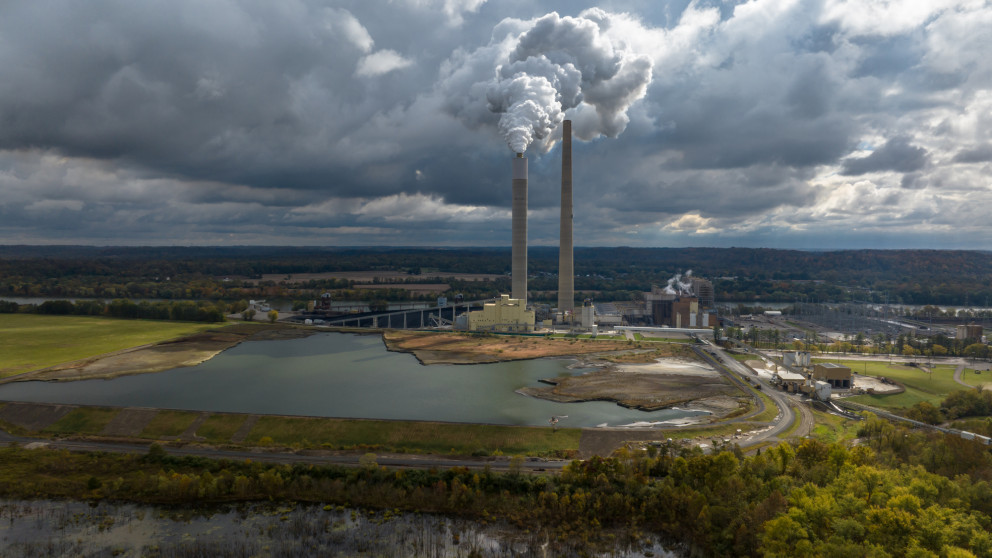
On 12 February, President Donald Trump took an axe to US climate policy. Claiming that it was “restoring the American Dream”, the US Environmental Protection Agency (EPA) repealed the landmark "Endangerment Finding", which classified emissions of carbon dioxide and five other greenhouse gases as a threat to public health and the well-being of present and future generations. The finding has underpinned climate policy in the USA for the last 17 years – in good times and bad.
For me, this step marks a very personal disappointment, because it was almost seventeen years ago, when the Endangerment Finding was adopted in 2009, that I started my career in climate policy as an intern at the Federal Ministry for the Environment. I passionately worked through my—unpaid—38-hour week, closely following developments under the Obama Administration and the legal wrangling over climate policy that had been ongoing since 2007. The US Supreme Court’s ruling that the Environmental Protection Agency (EPA) must take action against greenhouse gases, which had been categorised as a threat to health and prosperity, met with celebrations, also at the German ministry. I studied the ruling and legal commentary meticulously and wrote a memo for the German Federal Minister for the Environment and Climate.
In 2007, following the arguments set out in "Massachusetts vs. EPA", the Supreme Court had ruled that the most important greenhouse gases (carbon dioxide, methane, nitrous oxide, fluorocarbons, perfluorocarbons and sulphur hexafluoride) should also be regulated under the US Clean Air Act. Over the course of two years, the EPA compiled the scientific evidence for the so-called Endangerment Finding and received the legal mandate to act.
Why is the Endangerment Finding so important? Unlike in Germany and the EU, the USA does not have a comprehensive climate protection law at the national level. Instead, climate policy is regulated via executive orders, as part of other laws and through EPA regulations. The Endangerment Finding has frequently been challenged since 2009, but it has remained valid to this day. It has underpinned key features of US climate and clean air policy, including emission standards for passenger cars issued by the EPA, permitting procedures for stationary sources, such as power plants, and regulations governing methane emissions.
The repeal of the Endangerment Finding comes as no surprise, given Trump’s track record on climate policy. The onus is now on his administration to demonstrate that the Supreme Court and EPA’s original decision and supporting evidence were flawed. However, with considerable advances expected in climate science by 2026, this will likely be a difficult task. In view of this, the administration will likely attempt to withdraw regulatory responsibility from the EPA by citing legal or procedural errors. The repeal of the Endangerment Finding will undoubtedly trigger years of legal challenges, as several NGOs and Democratic politicians have already announced their intention to pursue legal action. In the interim, all EPA greenhouse gas regulations – including vehicle emissions standards – will be suspended until a court orders otherwise. However, should the Supreme Court ultimately side with the Trump administration – a prospect considered likely given its current composition – reversing this decision will be difficult for future US governments.
This latest step by the US President is consistent with the policy he has pursued since taking office: championing deregulation, scrapping climate policy, and ramping up fossil fuels. It is particularly devastating, considering that the EPA’s regulatory practice based on the Endangerment Finding was in any case a less than optimal solution. With the exception of Biden’s “Inflation Reduction Act”, the past two decades have demonstrated that it is practically impossible to pass climate legislation in the US Congress.
The repeal of the Endangerment Finding will create uncertainty for all: a world without rules does not simply become a better one. Apart from the fact that health concerns will likely fall by the wayside, deregulation does not immediately lead to lower prices for consumers – a promise that Trump has used to justify this step. This is reminiscent of his election campaign promise to halve Americans' electricity and energy bills. Instead, electricity bills in the USA rose by an average of almost seven per cent. It remains uncertain how the US automotive industry will truly react and whether manufacturers will wait for legal challenges to play out before producing dirtier cars. However, with stricter standards in demand globally, the feasibility (and indeed profitability) of producing vehicles solely for the US market is unclear. Moreover, some experts anticipate that the lack of federal regulation will further empower US states to pursue their own climate and clean air policy, with vehicle standards in some states already exceeding federal requirements.
In the coming years, we can only hope that US states, alongside clean-tech developments globally, will once again serve as an anchor of stability for climate policy. Perhaps it will also become clear that the “American Dream” is no longer solely dependent on the promise of cheaper cars. The fact that we've made significant progress over the past 17 years gives some grounds for hope.