Thinking about non-anthropocentric immanent aquatic deities
15.12.2025
I have been thinking with freshwater mussels, and their place-specific natural and cultural histories, for some years now. NAIAD is an artistic inquiry that explores the freshwater environments of Berlin and Brandenburg through mussels - animals that create liveable habitats for multispecies communities and whose presence is an indicator of healthy freshwater systems. This research uses aesthetic approaches to engage with mussels, their rural and urban aquatic environments and the German Water Framework Directive (2021), through the lenses of multispecies activist poetics and hydro-feminism. NAIAD explores the implications of positing mussels as protectors as much as animals to-be-protected. How might freshwater policy be written differently if mussels were given legal subjecthood, with their capacity to act in the world (their freshwater environments) restored to them? It does this by (1) critically engaging with correspondences across representations of the roles, morphologies and environments of female water deities and those of mussels; and (2) reimagining water policy from a mussel’s perspective.
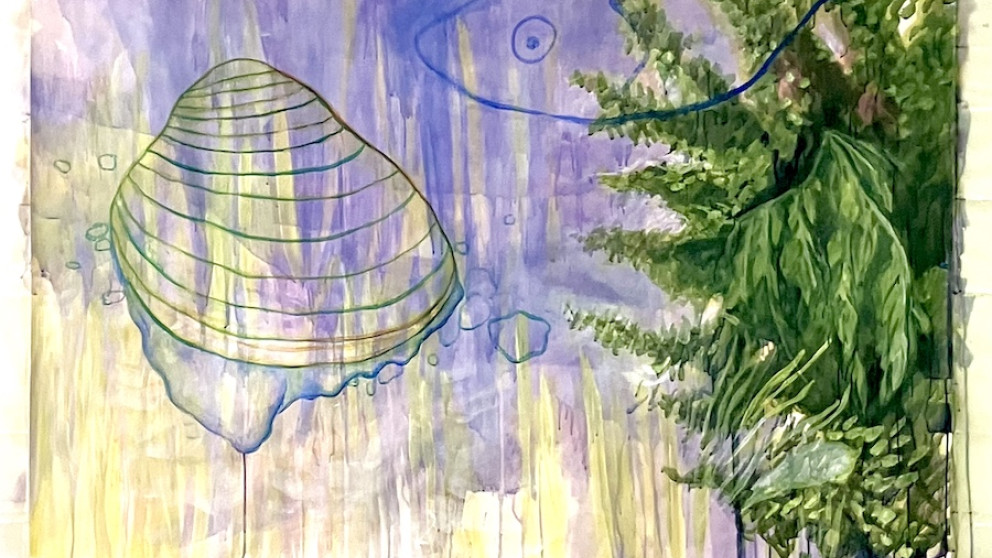
The project identified six species of indigenous mussels currently or historically found in Berlin and the surrounding Brandenburg. These species belong to a family called Unionidae. An alternate name given by zoologists was Naiads, like the lesser female deities of Ancient Greece who were guardians of freshwater bodies (such as rivers, springs, brooks and lakes), describing their role as keystone species that filter and clean the water. The different mussel species are reimagined as non-anthropocentric deities of their freshwater environments, from which they cannot be ontologically separated. The resulting series of paintings designates guardian deities to Brandenburg and Berlin bodies of water, in the form of the naiad, or mussel, that could or does inhabit its particular aquatic environment. These draw on 1970s ecofeminist goddess art and activism, with a multispecies twist. The process of making is an attempt to perform a kind of non-representational, diffractive visual re-embodiment (akin to Karen Barad’s Brittlestar), by channelling remembered and speculative sensory engagements with the specific aquatic environments through affective use of colour, perspective, movement, texture and form. A series of accompanying postcards ground the aesthetic and poetic in their political context, redrawing images and rewriting text from the German Water Framework Directive from a mussel’s perspective. In this way, the work attempts to re-figure the naiad as NAIAD: Non-Anthropocentric Immanent Aquatic Deity.